
The Fate of the Earth
By Jonathan Schell
Stanford University Press
One of the most influential books of the turn of the century alerting the population to the terrible effects of nuclear war has been Jonathan Schell’s The Fate of the Earth. The world has not become a safer place ever since the publication of the book. Indeed we now live in a more unstable and dangerous world and the current nuclear arsenal of the nuclear states are far more advanced in their destructive power and quantitatively more abundant. It is time to have a second look at the unimaginable consequences of nuclear war that Jonathan Schell warned us about many years ago.
The following selections highlight the consequences of these terrible weapons for the survival of all life on earth and leave out the detailed technical specifications of how nuclear weapons work and are constructed:
________________________________
“SINCE JULY 16, 1945, when the first atomic bomb was detonated, at the Trinity test site, near Alamogordo, New Mexico, mankind has lived with nuclear weapons in its midst. Each year, the number of bombs has grown, until now there are some fifty thousand warheads in the world, possessing the explosive yield of roughly twenty billion tons of TNT, or one million six hundred thousand times the yield of the bomb that was dropped by the United States on the city of Hiroshima, in Japan, less than a month after the Trinity explosion.

These bombs were built as ‘weapons’ for ‘war,’ but their significance greatly transcends war and all its causes and outcomes. They grew out of history, yet they threaten to end history. They were made by men, yet they threaten to annihilate man. They are a pit into which the whole world can fall – a nemesis of all human intentions, actions, and hopes. Only life itself, which they threaten to swallow up, can give the measure of their significance. Yet in spite of the immeasurable importance of nuclear weapons, the world has declined, on the whole, to think about them very much.” (Source: The Fate of the Earth by Jonathan Schell, pp. 3-4)
“In what follows, I shall offer some thoughts on the origin and the significance of this predicament, on why we have so long resisted attempts to think about it (we even call a nuclear holocaust ‘unthinkable’) or deal with it, and on the shape and magnitude of the choice that it forces upon us.” (Source: Ibid. p. 4)
“The destruction of human civilization, even without the biological destruction of the human species, may perhaps rightly be called the end of the world, since it would be the end of that sum of cultural achievements and human relationships which constitutes what many people mean when they speak of ‘the world.'” (Source: Ibid. pp. 6-7)
“A part of our quandary may lie in the fact that even a denial of the reality stems from what is, in a sense, a refusal to accept nuclear annihilation; that is, a refusal to accept even in imagination what Dr. Robert Jay Lifton, the author of pioneering studies of the psychology of the nuclear predicament, has appropriately called an “immersion in death.” As such, the denial may have intermixed in it something that is valuable and worthy of respect. Like active revulsion and protest against nuclear weapons, a denial of their reality may spring – in part, at least -from a love of life, and since a love of life may ultimately be all that we have to pit against our doom.” (Source: Ibid. p. 8)
“The 1975 N.A.S. [National Academy of Sciences] report has estimated that in a [nuclear] holocaust in which ten thousand megatons were detonated in the Northern Hemisphere the reduction of ozone in this hemisphere could be as high as seventy per cent and in the Southern Hemisphere as high as forty per cent, and that it could take as long as thirty years for the ozone level to return to normal. The ozone layer is crucial to life on earth, because it shields the surface of the earth from lethal levels of ultraviolet radiation, which is present in sunlight. Scientist Glasstone remarks simply, ‘If it were not for the absorption of much of the solar ultraviolet radiation by the ozone, life as currently known could not exist except possibly in the ocean.’
Without the ozone shield, sunlight, the life-giver, would become a life extinguisher. In judging the global effects of a [nuclear] holocaust, therefore, the primary question is not how many people would be irradiated, burned, or crushed to death by the immediate effects of the bombs but how well the ecosphere, regarded as a single living entity, on which all forms of life depend for their continued existence, would hold up. The issue is the habitability of the earth, and it is in this context, not in the context of the direct slaughter of hundreds of millions of people by the local effects, that the question of human survival arises.” (Source: Ibid. pp. 20-21)
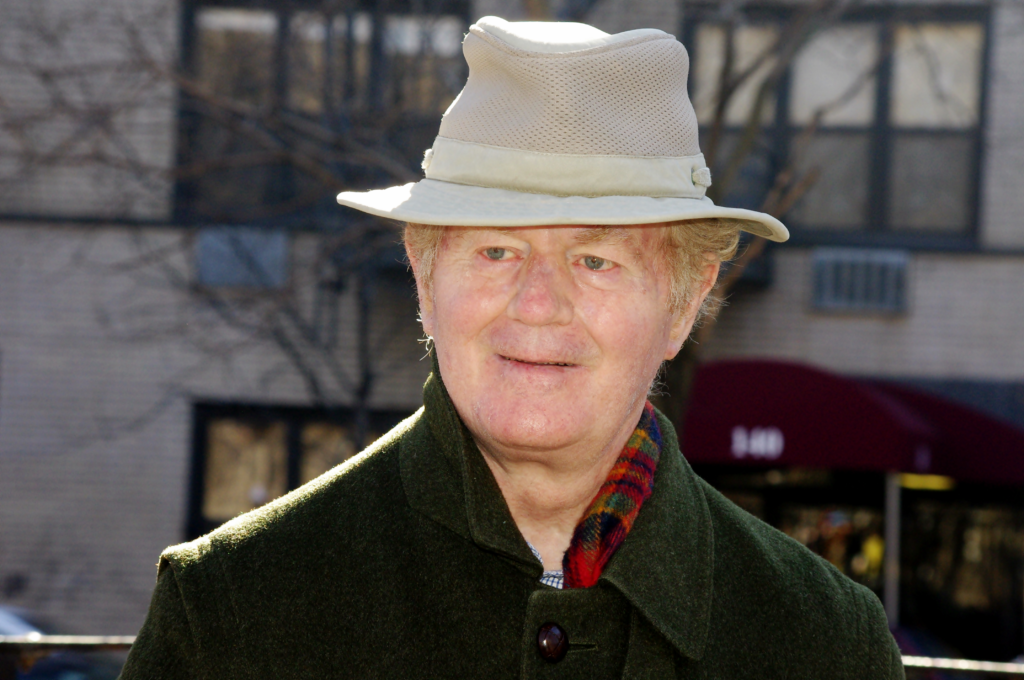
Jonathan Schell (1943-2014) was an American reporter and writer who wrote on US foreign policy and the danger of nuclear weapons. Fate of the Earth was published in 1982 and was highly influential in the awakening of the world to the existential threat of nuclear war.
“At each level, life has both considerable recuperative powers, which might restore it even after devastating injury, and points of exceptional vulnerability, which leave it open to sudden, wholesale, and permanent collapse, even when comparatively little violence has been applied. Just as a machine may break down if one small part is removed, and a person may die if a single artery or vein is blocked, a modern technological society may come to a standstill if its fuel supply is cut off, and an ecosystem may collapse if its ozone shield is depleted. Nuclear weapons thus do not only kill directly, with their tremendous violence, but also kill indirectly, by breaking down the man-made and the natural systems on which individual lives collectively depend. Human beings require constant provision and care, supplied both by their societies and by the natural environment, and if these are suddenly removed people will die just as surely as if they had been struck by a bullet.
Nuclear weapons are unique in that they attack the support systems of life at every level. And these systems, of course, are not isolated from each other but are parts of a single whole: ecological collapse, if it goes far enough, will bring about social collapse, and social collapse will bring about individual deaths. Furthermore, the destructive consequences of a nuclear attack are immeasurably compounded by the likelihood that all or most of the bombs will be detonated within the space of a few hours, in a single huge concussion.
Normally, a locality devastated by a catastrophe, whether natural or man-made, will sooner or later receive help from untouched outside areas, as Hiroshima and Nagasaki did after they were bombed; but a nuclear holocaust would devastate the ‘outside’ areas as well, leaving the victims to fend for themselves in a shattered society and natural environment. And what is true for each city is also true for the earth as a whole: a devastated earth can hardly expect ‘outside’ help. The earth is the largest of the support systems for life, and the impairment of the earth is the largest of the perils posed by nuclear weapons.” (Source: Ibid. p. 23)
“For most people, however, the lack of any opportunity to proceed to shelters would be without importance in any case, since shelters, even if they existed, would be of no use. It is now commonly acknowledged that economically feasible shelters cannot provide protection against the blast, heat, intense radiation, and mass fires that would probably occur in densely populated regions of the country – that such shelters could save lives only in places that were subjected to nothing worse than modest amounts of fallout.
Furthermore, there is a very serious question whether many people would survive in the long run even if they did manage to save themselves in the short run by sealing themselves up in shelters for several weeks or months. Finally, it seems worth mentioning that, whatever the potential value of shelters might be, most existing ones either are situated in places where they are useless (in large cities, for example) or lack some or all of the following necessary equipment for an effective shelter: adequate shielding from radiation; air filters that would screen out radioactive particles; food and water to last as long as several months; an independent heating system, in places where winters are severe; medical supplies for the injured, sick, and dying, who might be in the majority in the shelters; radiation counters to measure levels of radiation outdoors, so that people could know when it was safe to leave the shelter and could determine whether food and drink were contaminated; and a burial system wholly contained within the shelter, in which to bury those who died of their injuries or illness during the shelter period.” (Source: Ibid. p. 35)
“On August 6, 1945, at 8:16 A.M., a fission bomb with a yield of twelve and a half kilotons was detonated about nineteen hundred feet above the central section of Hiroshima. By present-day standards, the bomb was a small one, and in today’s arsenals it would be classed among the merely tactical weapons. Nevertheless, it was large enough to transform a city of some three hundred and forty thousand people into hell in the space of a few seconds.” (Source: Ibid. pp. 37-38)
“The injuries from the attack would very likely be compounded by epidemics. Dr. H. Jack Geiger, who teaches community medicine at the School of Biomedical Education of the City College of New York, recently described to me the likely medical conditions after a limited attack. ‘The landscape would be strewn with millions of corpses of human beings and animals,’ he pointed out. ‘This alone is a situation without precedent in history. There would be an immense source of pollution of water and food. If you read the literature concerning natural disasters such as floods and typhoons, you find that there is always an associated danger of cholera or typhoid. The corpses would also feed a fast-growing population of insects, and insects happen to be a prime vector of disease. Naturally, medical measures to fight disease would not be taken, since the blasts would have destroyed virtually all medical facilities. Nor, of course, would there be such elementary sanitary facilities as running water and garbage collection. Finally, the population’s resistance to infection would have been weakened, since many would be suffering from sub-lethal radiation sickness and wounds. It would be impossible to devise circumstances more favorable to the spread of epidemics.'” (Source: Ibid. p. 68)
“Strategists of nuclear conflict often speak of a period of ‘recovery’ after a limited attack, but a likelier prospect is a long-term radical deterioration in the conditions of life. For a while, some supplies of food and clothing would be found in the rubble, but then these would give out. For a people, the economy – any kind of economy, whether primitive or modern – is the means of survival from day to day. So if you ruin the economy – if you suspend its functioning, even for a few months – you take away the means of survival. Eventually, if enough people do live, the economy will revive in one form or another, but in the meantime people will die: they will starve, because the supply of food has been cut off; they will freeze, because they have no fuel or shelter; they will perish of illness, because they have no medical care. If the economy in question is a modern technological one, the consequences will be particularly severe, for then the obstacles to restoring it will be greatest.” (Source: Ibid. pp. 68-69)
“Photophthalmia is, in the words of the 1975 N.A.S. report, ‘disabling and painful’; also, ‘there are no immune groups,’ and ‘there is no adaptation.’ One can avoid photophthalmia by wearing goggles whenever one goes outside, but so far the world has made no provision for each person on earth to have a pair of goggles in case the ozone is depleted. However, if the higher estimates of depletion turn out to be correct, people will not be able to stay outdoors very long anyway. At these levels, ‘incapacitating’ sunburn would occur in several minutes.
The skin of many mammals would be protected by fur or other covering, but their eyes would remain exposed…ozone reduction might bring about the blinding of the world’s animals, and that this effect alone would have the makings of a global ecological catastrophe.” (Source: Ibid. p. 84)
“We have no right to place the possibility of this limitless, eternal defeat on the same footing as risks that we run in the ordinary conduct of our affairs in our particular transient moment of human history. To employ a mathematical analogy, we can say that although the risk of extinction may be fractional, the stake is, humanly speaking, infinite, and a fraction of infinity is still infinity. In other words, once we learn that a [nuclear] holocaust might lead to extinction we have no right to gamble, because if we lose, the game will be over, and neither we nor anyone else will ever get another chance. Therefore, although, scientifically speaking, there is all the difference in the world between the mere possibility that a [nuclear] holocaust will bring about extinction and the certainty of it, morally they are the same, and we have no choice but to address the issue of nuclear weapons as though we knew for a certainty that their use would put an end to our species. In weighing the fate of the earth and, with it, our own fate, we stand before a mystery, and in tampering with the earth we tamper with a mystery.” (Source: Ibid. p. 95)
“In trying to describe possible consequences of a nuclear holocaust, I have mentioned the limitless complexity of its effects on human society and on the ecosphere – a complexity that sometimes seems to be as great as that of life itself. But if these effects should lead to human extinction, then all the complexity will give way to the utmost simplicity – the simplicity of nothingness. We – the human race – shall cease to be.” (Source: Ibid. p. 96)
____________________________________________
You can download a copy of The Fate of the Earth free of charge for your personal reading via the following link:
https://dokumen.pub/qdownload/the-fate-of-the-earth-and-the-abolition-9781503618305.html
All content on this website is copyrighted, and cannot be republished or reproduced without permission.
Share this article!

The truth does not fear investigation.
You can help support Dominion Review!
Dominion Review is entirely funded by readers. I am proud to publish hard-hitting columns and in-depth journalism with no paywall, no government grants, and no deference to political correctness and prevailing orthodoxies. If you appreciate this publication and want to help it grow and provide novel and dissenting perspectives to more Canadians, consider subscribing on Patreon for $5/month.
- Riley Donovan, editor