Beneath the set of policies pursued by a prime minister usually rests a conception of what Canada was, is, and should be: Macdonald’s anti-American Canadian nationalism, Diefenbaker’s old-school toryism and affinity for Canada’s British connection, Lester B. Pearson’s liberal internationalism that informed his support for global endeavours such as peacekeeping.
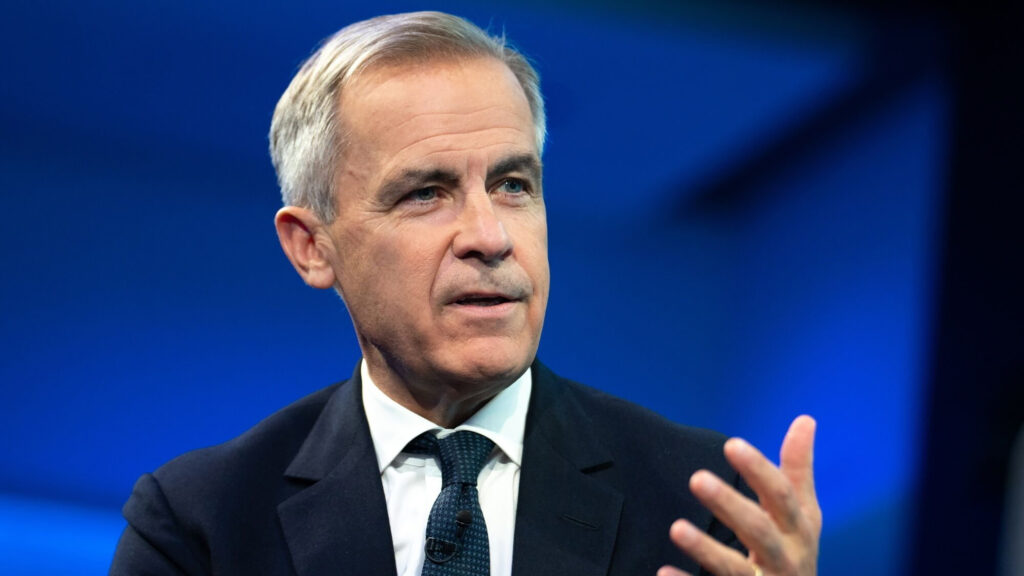
For better or worse, even in a parliamentary system where power is less concentrated in one person than in other systems, the worldview of the “first among equals” in the Cabinet profoundly shapes the policies pursued by the government – which in turn shape the country. For this reason, it is worth exploring the dramatic shift in prime ministerial worldview that took place when the Carney government took power.
Let us briefly revisit the Trudeau worldview, best summed up in a now infamous New York Times interview shortly after his election in 2015:
‘‘There is no core identity, no mainstream in Canada…There are shared values – openness, respect, compassion, willingness to work hard, to be there for each other, to search for equality and justice. Those qualities are what make us the first postnational state.’’
This post-national vision reduced Canada to a neutral territory, a blank canvas on which ever-growing numbers of immigrants were invited to express their own cultures upon. In 2023, the federal government unveiled a new passport that replaced the Fathers of Confederation, Vimy Ridge, and Terry Fox with vague imagery of nature and a child jumping into a lake. Internal documents revealed in 2024 that the Royal Canadian Navy was considering replacing the Heart of Oak, its historic marching anthem, with something “more inclusive”.
All of this changed on April 28th, 2025 when the Liberals swept into power under a new leader in the context of a trade war with an American administration openly threatening to use “economic force” to make Canada the 51st US state.
Carney’s first words actions as prime minister were a notable departure from Trudeau’s post-nationalism. Upon becoming prime minister in March 2025 after having won the Liberal leadership race, he described Canada as a country “built on the bedrock of three peoples: Indigenous, French, and British” in his inaugural speech.
The inversion of the typical order of that phrase (British, French, and Indigenous) was an attempt to place the least amount of emphasis on the historically most central and powerful founding people, and in that way reflects a remnant of political correctness. But the most important fact is that Carney used this phrase at all – the idea of Canada having been founded by two European peoples along with the Indigenous peoples of this continent did not fit into post-nationalism and was thus not emphasized in the Trudeau years.
Shortly after this speech, Carney went on a trip to Britain, France, and Nunavut. This trip was to reaffirm old partnerships and bolster trade ties in Europe, and enhance Arctic security in Canada’s North – but again, Carney brought out the three founding peoples line to justify the trip on a symbolic level:
“Canada was built upon a union of peoples – Indigenous, French, and British. My visit to France and the United Kingdom will strengthen trade, commercial, and defence ties with two of our strongest and most reliable partners, and my visit to Nunavut will be an opportunity to bolster Canada’s Arctic sovereignty and security, and our plan to unlock the North’s full economic potential.”
Following the April election, Prime Minister Carney invited King Charles and Queen Camilla to make a visit to Canada and deliver the Carney government’s first Throne Speech, warmly welcoming their arrival:

“The Royal Visit is a reminder of the bond between Canada and the Crown – one forged over generations, shaped by shared histories, and grounded in common values. A bond that, over time, has evolved, just as Canada has, to reflect the strength, diversity, and confidence of our people.”
Recently, Carney has been further elaborating his conception of Canada, referring to it as “civic nationalism”. As Carney seems to understand it, civic nationalism is a nationalism based on a shared allegiance to a particular country, but devoid of any preferences about the demographic composition of that country.
At a February 17th press conference, Carney drew a distinction between what he called the Trump administration’s “Christian nationalism” and his own nationalism. “Canadian nationalism is a civic nationalism”, Carney said, emphasizing that this nationalism “respects diverse cultures, diverse faiths, people without faith, all aspects of diversity, the great diversity of this beautiful country”.
Carney further developed this idea during his address to Australia’s Parliament on March 5th, in which he defined Canada and Australia as “civic nations” held together by a pursuit of the “common good”:
“On this common foundation, we have built civic nations, societies held together not by blood or soil, not by a single faith or culture, but by something more demanding and durable. A shared commitment to live together, to accommodate our differences, and to pursue the common good. Canada’s founding insight was that unity does not require uniformity. That we can share a country without conforming to a single identity. That our differences honestly acknowledged and respectfully navigated are a source of strength. Australia arrived at the same destination by its own path.”
On the one hand, Carney’s vision of Canada is a break from Trudeau’s because it is a kind of nationalism. Canada’s historical roots are now celebrated by our prime minister instead of being continually put down. Our economic and political independence from the United States is asserted and actively pursued, as Carney seeks to diversify trade relationships, build projects of national importance, and strengthen our military. The interests of Canadian citizens are even elevated slightly above those of foreigners, a refreshing change, with Ottawa cutting immigration levels after Carney pledged to get numbers down to “sustainable levels” in a mandate letter to his ministers.
This shift away from post-nationalism is a welcome breath of fresh air. At the same time, it contains flaws that render it insufficient.
Carney is correct that Canada is not defined by “a single faith or culture”. This is a truism, given that we were founded by three peoples: British, French, and Indigenous. In this way, even in the very beginning, we already differed from countries like Japan which consist overwhelmingly of a single ethnicity. The concept of “civic nationalism” is also a legitimate and accurate description of Canadian nationalism – we are a country in which all citizens regardless of ethnic identity are full participants in society. Canadian patriotism is felt by citizens of many races.
However, Carney’s conception of Canadian nationalism falls short by refusing to allow any importance for shared ancestry. Canadian identity does transcend shared ancestry, but it does not logically follow from this that shared ancestry cannot be one element of a broader national identity.
We can think of the Canadian nation as two concentric circles. In the larger circle we have citizens. Not the nearly 7% of Canada composed of temporary residents – international students, foreign workers, and asylum seekers. Not permanent residents, who are not Canadians by any definition. This outer circle consists only of our fellow countrymen, those whom we share the bond of citizenship with. In this larger circle, we find a very broad array of races, all of whom are fully Canadian.
Thus far, this fits with Carney’s understanding of Canada. However, he disagrees with the existence of a smaller circle, or perhaps considers it unseemly to mention it. This circle is old stock Canadians, the demographic core of the country whose ancestry on the northern half of this continent spans multiple generations. We can quibble about what number of generations, but all categories are fuzzy on the edges – debating where the edge of a category is does not negate the existence of the category.
This interior circle consists of course of the Indigenous peoples, old stock Anglo Canadians, and old stock French Canadians (in Quebec, this last category is sometimes referred to as “les Quebecois de souche”).
The inevitable, bad faith criticism that “old stock” is another way to say “white” is incorrect. The Indigenous peoples of Canada are of course non-European, and among old stock Canadians in Anglo Canada there are of course some descendants of non-European settlers including black Loyalists, Japanese, and even Hawaiians. A newly naturalized white American or Ukrainian, while likely and hopefully a heartfelt Canadian patriot, would not be an old stock Canadian (and would not claim to be).
While the existence of a Canadian old stock demographic core has been made controversial as political correct norms have become entrenched in our institutions, it was not long ago that it was widely acknowledged. In Nationalism Without Walls: The Unbearable Lightness of Being Canadian (1995), the late great Richard Gwyn, a mainstream journalist in his day freely uses the term “English-Canadians” to describe old stock Canadians in Anglo Canada throughout the book. From the context, he does not mean Canadians of ethnically English heritage specifically, but rather the same demographic core of which I refer to. This was par for the course for Canadian authors of all political persuasions up until very recently.
It would be laughable to describe a gentle, thoughtful, mainstream commentator like Richard Gwyn as a white supremacist. By referring to old stock Anglo Canadians, he was simply acknowledging a reality that in his time was widely accepted.
Even in 2014, a mainstream Liberal Party figure, Stéphane Dion, accidentally admitted to the existence of old stock Canadians while trying to encourage immigrants to get out in nature to hunt, trap, and fish. When he sees people fishing in the Laurentians, he said, it is usually “two middle-aged old stock French-Canadians or English-Canadians.” The very next year, Liberal partisans launched an energetic rhetorical assault against Stephen Harper for off-handedly using the same term in a debate with Justin Trudeau – despite the fact that Harper had maintained very high levels of immigration throughout his time as prime minister, putting into question the idea that he was hostile to immigrants.
Other than simply being intellectual honest, why does acknowledging the existence of old stock Canadians matter, and why is any form of Canadian nationalism that refuses to do so insufficient? Two simple reasons.
Firstly, because the old stock demographic core of Canada has a collective right to remain a majority in its homeland – the only homeland it knows. This is the right of all such groups the world over, from the French to the Japanese. Secondly, because while naturalized citizens and old stock Canadians are both fully Canadian, it was old stock Canadians who built the country and its institutions, giving our nation its very distinctive identity – indeed, the same identity which immigrants assimilate into today. If our political elite continues its present policy of mass immigration, this identity will be erased and there will be nothing left to assimilate into.
Richard Gwyn prophetically foresaw just this happening in Nationalism Without Walls, which I remind you was a very mainstream book that basically called for all elements of Canadian society to come together patriotically into an inclusive form of nationalism that incorporates some measure of immigration restriction. On page 117, Gwyn writes of demographic change from mass immigration: “Increasingly, English-Canadian culture will be a culture of the hinterland, of the farms, of small towns, and of the suburbs”.
Carney’s vision of the country as a mere collection of disaggregated individuals pursuing the “common good” allows for no concern over such changes. Small wonder then, that despite a very commendable cut to temporary resident admissions, the Carney government still intends to permit the admission of nearly 1.3 million new foreigners as permanent residents in the space of just three years.
Every day, more Canadians wake up to the reality that mass immigration is incompatible with Canadian identity. Increasingly, immigrants are joining alongside the ranks of the native-born in this realization. Many are beginning to question the immigration narrative fed to them by our political, cultural, and academic elite, and are coming to suspect that mass immigration really only benefits cheap labour employers, slumlords, banks, real estate developers, and speculators.
Some people may be unbothered about the change being imposed on Canada by high levels of immigration. Very well. If that is the case, they will be quite satisfied with the present state of affairs.
However, those of us who believe that mass immigration is incompatible with Canadian identity are forced to conclude that Carney’s vision of Canada, while an improvement over Trudeau’s post-nationalism, is still insufficient. Our country has done an about face and is at least walking down the right path now, but we have only taken the first few timorous steps. Let us continue treading along, swiftly and boldly.
All content on this website is copyrighted, and cannot be republished or reproduced without permission.
Share this article!



The truth does not fear investigation.
You can help support Dominion Review!
Dominion Review is entirely funded by readers. I am proud to publish hard-hitting columns and in-depth journalism with no paywall, no government grants, and no deference to political correctness and prevailing orthodoxies. If you appreciate this publication and want to help it grow and provide novel and dissenting perspectives to more Canadians, consider subscribing on Patreon for $5/month.
- Riley Donovan, editor