
The commons are the cultural and natural resources accessible to all members of a society. They include natural resources such as the air, fishing grounds, groundwater basins, grazing lands, irrigation canals, streams, lakes, and oceans. They are, as Dr. Ursula Franklin has pointed out in her book The Real World of Technology, indivisible benefits. These resources are normally held in common. Planet Earth is our ultimate commons.
In Canada, the protection of the commons indeed has its roots in what is known as Red Tory philosophy, or the old Conservatives.
In contrast to the current neoliberal agenda, where all commitment to the protection of the community (the commons) is abandoned in the interest of private profiteering, Red Tories sought to protect Canada from absorption by the American Empire. Sir John A. Macdonald established the National Policy, which erected a tariff wall to protect Canadian manufacturing from being crushed by the giants of American manufacturing.
Red Tories were great Canadians who loved this country and dreamed of it becoming a truly strong and independent nation. They were people like the late philosopher George Grant and the gentle patriot Walter Gordon. They did not subscribe to the ideology of Continentalism, knowing very well that Continentalism would bring an end to Canada as an independent and self-directing nation. However, history was not kind to their dream, and continental integration proceeded at a fast pace, bolstered by the neoliberalism of some sectors of the Canadian elite and the majority of corporate bosses.
Walter Gordon, while he was finance minister in the Lester B. Pearson cabinet, prepared a budget the provisions of which were designed to protect the Canadian economy and prevent Canada’s national economic assets from being taken over by foreign interests. The reaction was swift from south of the 49th Parallel, and Pearson was forced to drop Gordon from the cabinet. So, the integration process continued.
Much later on came Brian Mulroney, that neoliberal admirer of “free trade”, misnamed a Progressive Conservative, who promised the people of Canada a Garden of Eden of “prosperity” and opened the gates for an unhindered foreign takeover of Canada – first economically, and then ideologically.
What is the commons?
One of biologist Barry Commoner’s lasting legacies is his Four Laws of Ecology, as written in his famous book The Closing Circle in 1971. The four laws are:
- Everything is connected to everything else.
- Everything must go somewhere.
- Nature knows best.
- There is no such thing as a free lunch.
(For an expanded explanation of these laws of nature see The Closing Circle, Chapter 2: The Ecosphere).
In his book, The Logic of Collective Action (1965), Mancur Olson challenged the presumption that the possibility of a benefit for a group would be sufficient to generate collective action to achieve that benefit.

Olson argued that “unless the number of individuals is quite small, or unless there is coercion or some other special device to make individuals act in their common interest, rational, self-interested individuals will not act to achieve their common or group interests.” (Olson 1965, Page 2)
Olson’s argument rests largely on the premise that those who cannot be excluded from obtaining the benefits of a collective good once the good is produced have little incentive to contribute voluntarily to the provision of that good.
According to Garrett Hardin, the author of the most famous essay on the commons (published in Science, December 13, 1968) the tragedy of the commons develops in this way:
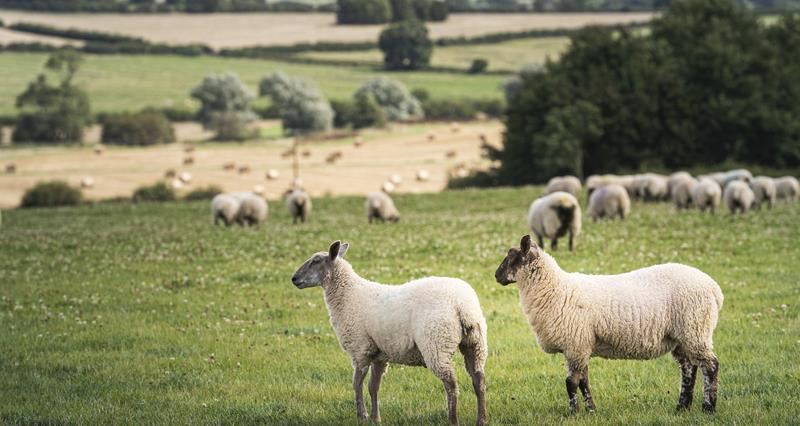
“Picture a pasture open to all. It is to be expected that each herdsman will try to keep as many cattle as possible on the commons. Such an arrangement may work reasonably satisfactorily for centuries because tribal wars, poaching, and disease keep the numbers of both man and beast well below the carrying capacity of the land. Finally, however, comes the day of reckoning, that is, the day when the long-desired goal of social stability becomes a reality. At this point, the inherent logic of the commons remorselessly generates tragedy.
As a rational being, each herdsman seeks to maximize his gain. Explicitly or implicitly, more or less consciously, he asks, ‘What is the utility to me of adding one more animal to my herd?’ This utility has one negative and one positive component.
- The positive component is a function of the increment of one animal. Since the herdsman receives all the proceeds from the sale of the additional animal, the positive utility is +1.
- The negative component is a function of the additional overgrazing created by one more animal. Since, however, the effects of overgrazing are shared by all the herdsmen, the negative utility for any particular decision-making herdsman is only a fraction of – 1.”
Thereafter “the rational herdsman concludes that the only sensible course for him to pursue is to add another animal to his herd, and another, and another… But this is the conclusion reached by each and every rational herdsman sharing a commons. Therein is the tragedy. Each man is locked into a system that compels him to increase his herd without limit – in a world that is limited. Ruin is the destination toward which all men rush, each pursuing his own best interest in a society that believes in the freedom of the commons. Freedom in the commons brings ruin to all.”
– Garett Hardin in his seminal 1968 essay The Tragedy of the Commons
“Likewise, the oceans of the world continue to suffer from the survival of the philosophy of the commons. Maritime nations still respond automatically to the shibboleth of the ‘freedom of the seas.’ Professing to believe in the ‘inexhaustible resources of the oceans,’ they bring species after species of fish closer to extinction.” (Source: Hardin, The Tragedy of the Commons)
Currently, more than eight million tonnes of plastic enter the world’s oceans every year, according to the BBC.
Collective action problems related to the provision of Communal Resources and appropriation from Communal Resources extend over time. Individuals attribute less value to benefits that they expect to receive in the distant future, and more value to those expected in the immediate future. In other words, individuals discount future benefits. Time horizons are affected by whether or not individuals expect that they or their children will be present to reap these benefits, as well as by opportunities they may have for more rapid returns in other settings.
What options shall be followed?
We might keep the commons as public property but strictly limit their use. The national parks in Canada are the best case in point.
In this model we have to deal with the costs of acquiring accurate information about the conditions, as well as the costs of regulation and enforcement, since in every group there will be individuals who will ignore norms and act opportunistically when given a chance.
There are also situations in which the potential benefits will be so high that even strongly committed individuals will break norms. Consequently, the adoption of norms of behaviour will not reduce opportunistic behaviour to zero and strong regulation, enforcement, and monitoring would be required.
“Coercion is a means of assuring the full effectiveness of the communal spirit, which is not equally developed in all members of the community.” (Hans Ritschl, German Economist, quoted in Mancur Olson, Page 101)
“All social co-operations on a larger scale than the most intimate social group requires a measure of coercion.” (Reinhold Niebuhr in Moral Man and Immoral Society.)
There is yet a second option which may be workable for specific Communal Resources.
“A self-governed common-property arrangement in which the rules have been devised and modified by the participants themselves and also are monitored and enforced by them.” (Elinor Ostrom quoting Robert Netting from his book: Balancing on an Alp.)
However, this is workable only in small, tight-knit communities, like the high-alpine communities in Switzerland.
Pollution
So, in a reverse way, the tragedy of the commons reappears in problems of pollution. Here it is not a question of taking something out of the commons, but of putting something in – sewage, or chemical, radioactive, and heat wastes into water; noxious and dangerous fumes into the air, and distracting and unpleasant advertising signs into the line of sight. The calculations of utility are much the same as before. The rational person finds that his share of the cost of the wastes he discharges into the commons is less than the cost of purifying his wastes before releasing them.
“The air and waters surrounding us cannot readily be fenced for protection, so the tragedy of the commons as a cesspool must be prevented by different means, by coercive laws or taxing devices that make it cheaper for the polluter to treat his pollutants than to discharge them untreated.” (Source: Tragedy of the Commons)

The global commons
“We need to understand that we are in a nonlinear exponential phase… we have overwhelming scientific evidence that humanity now faces a new juncture of grand global risk. We have in just five decades transitioned from being a small world on a big planet where we could allow ourselves to have unsustainable economic growth without the Earth sending any invoices back to humanity up to now with overwhelming scientific evidence of a new big world on a small planet. We’ve reached the saturation point. We’re hitting the ceiling of the biophysical capacity where we can no longer exclude destabilizing the entire earth system.” (Source: Beyond the Anthropocene | Johan Rockström, Stockholm Resilience Centre – Sweden, speaking at the World Economic Forum, Zurich, Feb. 14, 2017)
The overriding risk is a complete breakdown of the Earth system and ecosystem collapse. In that regard, traversing from a linear to an exponentially charged Earth system is risky and could be fatal.
Here’s how the internationally renowned Swedish scientist Johan Rockström describes the impact of the new exponential biospheric change, speaking at the World Economic Forum in Zurich:
“If I take 35 linear steps, I’ll barely reach the coffee stand outside of this room. What happens if I take 35 exponential steps? I’d reach Copenhagen after 21 steps. Three more steps, I’m in New York. Another two steps and I encircle the entire planet. And, if I add another nine steps to my 35, I reach planet Mars.”
That’s the impact of exponential climate change, and we are dead centre in the midst of it:
“Climate change is becoming abrupt and runaway; and threatens just by itself to collapse societies, economies, and ultimately the biosphere.
Yet climate change is only one of at least ten global ecological catastrophes which threaten to destroy the global ecological system and portend an end to human beings, and perhaps all life. Ranging from nitrogen deposition to ocean acidification, and including such basics as soil, water, and air; virtually every ecological system upon which life depends is failing.
The threat to global ecological sustainability goes well beyond climate change, and represents a more systematic failing of current political and economic models. Namely, the commodification of natural ecosystems – that are our and all life’s habitat – and their unsustainable industrial clearance for short-term profit is sheer ecocidal madness.” (Source: Glen Barry writing in Millennium Alliance for Humanity, June 20, 2017)
All content on this website is copyrighted, and cannot be republished or reproduced without permission.
Share this article!




The truth does not fear investigation.
You can help support Dominion Review!
Dominion Review is entirely funded by readers. I am proud to publish hard-hitting columns and in-depth journalism with no paywall, no government grants, and no deference to political correctness and prevailing orthodoxies. If you appreciate this publication and want to help it grow and provide novel and dissenting perspectives to more Canadians, consider subscribing on Patreon for $5/month.
- Riley Donovan, editor