
A Review
By Alan Danesh
The Strange Death of Europe
Immigration, Identity, Islam
Douglas Murray
Bloomsbury
London. Oxford. New York.
2017
_______________________________________________________________________
Introduction: The Strange Death of Europe offers numerous explanations, including civilizational and psychological, for the European inability, due to loss of faith in its beliefs, traditions and legitimacy, to protect its culture and identity from being buried under the tidal waves of mass immigration from countries whose cultural values are incompatible with the European way of life. However, there is a more practical explanation for the European demise:

In all Western capitalist democracies politicians are the servants of the corporate ruling powers. And the corporate rulers have the sole aim of constantly increasing the labour pool and their consumer base in order to increase profits. Hence the servant politicians are willing to open the borders to impoverished masses of the Third World so corporate rulers will continue to fund the politicians’ ever more expensive election campaigns and reward them handsomely after they are ousted from the political arena.
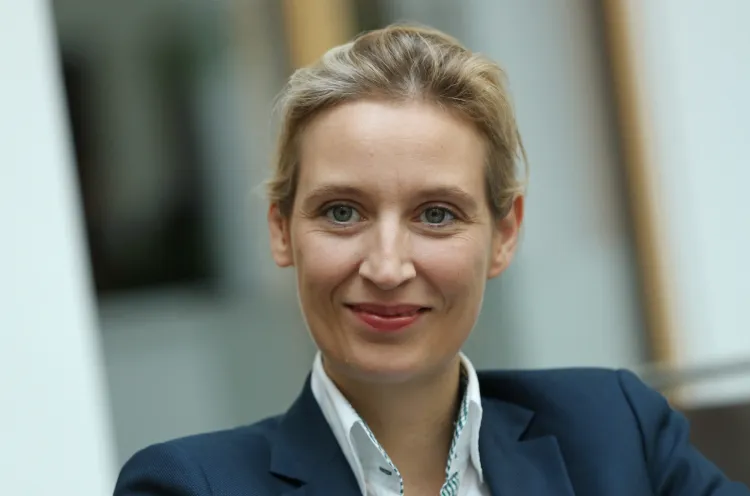
Currently in Germany the nationalist AfD is the most popular party under the co-leadership of charismatic Alice Weidel. But it stands little chance of forming the national government, since Germany has a proportional electoral system and the corrupt establishment parties are eager to join forces in order to prevent the formation of a national government by AfD, unless the German electorate is willing to provide the AfD a landslide victory with a 60% or higher percentage of electoral votes.
Please Note: The page references given for quotes are from the top frame of the digital edition, since no page numbers are listed in the text of the book.
________________________________________________________________________
“Europe is committing suicide. Or at least its leaders have decided to commit suicide. Whether the European people choose to go along with this is, naturally, another matter.
When I say that Europe is in the process of killing itself I do not mean that the burden of European Commission regulation has become overbearing or that the European Convention on Human Rights has not done enough to satisfy the demands of a particular community. I mean that the civilisation we know as Europe is in the process of committing suicide and that neither Britain nor any other Western European country can avoid that fate because we all appear to suffer from the same symptoms and maladies. As a result, by the end of the lifespans of most people currently alive Europe will not be Europe and the peoples of Europe will have lost the only place in the world we had to call home.” (Source: Douglas Murray: The Strange Death of Europe, Introduction)
“There is no single cause of the present sickness. The culture produced by the tributaries of Judaeo-Christian culture, the Ancient Greeks and Romans, and the discoveries of the Enlightenment has not been levelled by nothing. But the final act has come about because of two simultaneous concatenations from which it is now all but impossible to recover.” (Source: Ibid. Introduction)
“The first is the mass movement of peoples into Europe. In all Western European countries this process began after the Second World War due to labour shortages. Soon Europe got hooked on the migration and could not stop the flow even if it had wanted to. The result was that what had been Europe – the home of the European peoples – gradually became a home for the entire world. The places that had been European gradually became somewhere else. So places dominated by Pakistani immigrants resembled Pakistan in everything but their location, with the recent arrivals and their children eating the food of their place of origin, speaking the language of their place of origin and worshipping the religion of their place of origin. Streets in the cold and rainy northern towns of Europe filled with people dressed for the foothills of Pakistan or the sandstorms of Arabia. ‘The Empire strikes back’ noted some observers with a barely concealed smirk. Yet whereas the empires of Europe had been thrown off, these new colonies were obviously intended to be for good.” (Source: Ibid. Introduction)
“Which brings me to the second concatenation. For even the mass movement of millions of people into Europe would not sound such a final note for the continent were it not for the fact that (coincidentally or otherwise) at the same time Europe lost faith in its beliefs, traditions and legitimacy. Countless factors have contributed to this development, but one is the way in which Western Europeans have lost what the Spanish philosopher Miguel de Unamuno famously called the ‘tragic sense of life’. They have forgotten what Zweig and his generation so painfully learnt: that everything you love, even the greatest and most cultured civilisations in history, can be swept away by people who are unworthy of them. Other than simply ignoring it, one of the few ways to avoid this tragic sense of life is to push it away through a belief in the tide of human progress. That tactic remains for the time being the most popular approach.” (Source: Ibid. p. 7)
“For there is also the problem in Europe of an existential tiredness and a feeling that perhaps for Europe the story has run out and a new story must be allowed to begin. Mass immigration – the replacement of large parts of the European populations by other people – is one way in which this new story has been imagined: a change, we seemed to think, was as good as a rest. Such existential civilisational tiredness is not a uniquely modern European phenomenon, but the fact that a society should feel like it has run out of steam at precisely the moment when a new society has begun to move in cannot help but lead to vast, epochal changes.” (Source: Ibid. p. 7)
“We cannot become Indian or Chinese, for instance. And yet we are expected to believe that anyone in the world can move to Europe and become European. If being ‘European’ is not about race – as we hope it is not – then it is even more imperative that it is about ‘values’. This is what makes the question ‘What are European values?’ so important. Yet this is another debate about which we are wholly confused.” (Source: Ibid. p. 8)
“While unsure of ourselves at home we made final efforts at extending our values abroad. Yet whenever our governments and armies got involved in anything in the name of these ‘human rights’ – Iraq in 2003, Libya in 2011 – we seemed to make things worse and ended up in the wrong.” (Source: Ibid. p. 9)
“At any time the loss of all unifying stories about our past or ideas about what to do with our present or future would be a serious conundrum. But during a time of momentous societal change and upheaval the results are proving fatal. The world is coming into Europe at precisely the moment that Europe has lost sight of what it is. And while the movement of millions of people from other cultures into a strong and assertive culture might have worked, the movement of millions of people into a guilty, jaded and dying culture cannot. Even now Europe’s leaders talk of an invigorated effort to incorporate the millions of new arrivals.” (Source: Ibid. p. 10)
“This is just one reason why it is likely that our European culture, which has lasted all these centuries and shared with the world such heights of human achievement, will not survive. As recent elections in Austria and the rise of Alternative für Deutschland seem to prove, while the likelihood of cultural erosion remains irresistible the options for cultural defence continue to be unacceptable. Stefan Zweig was right to recognise the derangement, and right to recognise the death sentence that the cradle and Parthenon of Western civilisation had passed upon itself. Only his timing was out. It would take several more decades before that sentence was carried out – by ourselves on ourselves. Here, in the in-between years, instead of remaining a home for the European peoples we have decided to become a ‘utopia’ only in the original Greek sense of the word: to become ‘no place’. This book is an account of that process.” (Source: Ibid. pp. 10-11)
“In 2002 the latest census for England and Wales was published. Compiled the previous year, it showed the extent to which the country had changed in the decade since the last census was taken. Imagine somebody then, in 2002, deciding to extrapolate on the findings in that census and speculating on what the next ten years might bring. Imagine that they said: ‘White Britons will become a minority in their own capital city by the end of this decade and the Muslim population will double in the next ten years’.” (Source: Ibid. p. 12)
“Yet however abused, anybody offering such analysis in 2002 would have been proved wholly and utterly right. The next census, compiled in 2011 and published at the end of 2012, revealed not just the facts mentioned above, but far more. It proved that the number of people living in England and Wales who had been born overseas had risen by nearly three million in the previous decade alone. It showed that only 44.9 per cent of London residents now identified themselves as ‘white British’. And it revealed that nearly three million people in England and Wales were living in households where not one adult spoke English as their main language.” (Source: Ibid. p. 12)
“These were very major ethnic changes to a country at any point in time. But there were equally striking findings about the changing religious make-up of Britain. For instance they revealed that almost every belief was on the rise apart from Christianity. Only Britain’s historic national religion was in free fall. Since the previous census, the number of people identifying themselves as Christian had dropped from 72 to 59 per cent. The number of Christians in England and Wales dropped by more than four million, and the number of Christians overall fell from 37 million to 33 million.” (Source: Ibid. pp. 12-13)
“In each European country’s case the authorities laboured under precisely the same misapprehensions as the British authorities, not least in believing that the first guest-workers might prove a temporary phenomenon, returning to their home countries once their work was done. Across the continent it seemed to come as a surprise to governments that most of these workers would put down roots in the country they had entered – that they would seek to bring in their families, that their families would need assistance, and that their children would need to go to school. Once such roots had been put down there was ever less likelihood that they would be torn up again. And even if the lure of home remained great, the standard of living these workers were able to enjoy in the West meant far more people stayed than returned to their country of origin.” (Source: Ibid. p. 22)
“The January before the release of the 2011 census results a gang of nine Muslim men — seven of Pakistani origin, two from North Africa — were convicted and sentenced at the Old Bailey in London for the sex trafficking of children between the ages of 11 and 15. On that occasion one of the victims sold into a form of modern-day slavery was a girl of 11 who was branded with the initial of her ‘owner’ abuser: ‘M’ for Mohammed. The court heard that Mohammed ‘branded her to make her his property and to ensure others knew about it’. This did not happen in a Saudi or Pakistani backwater, nor even in one of the northern towns that so much of the country had forgotten about and which had seen many similar cases over the same period. This happened in Oxfordshire between 2004 and 2012.” (Source: Ibid. p. 26)
“After decades of immigration from the third world, to paint a French high-tech entrepreneur as a typical migrant requires a considerable level of dishonesty. Most people who came to Britain in the period after the Second World War were not highly educated but poorly educated and from poor societies.” (Source: Ibid. p. 35)
“Away from the spin, what UCL’s own research quietly showed was that non-EEA migrants had actually taken out around £95 billion more in services than they had paid in in taxes, meaning that if you took the period 1995–2011 and included all immigrants (not just a convenient high net-worth selection), then by UCL’s own measurements, immigrants to the United Kingdom had taken out significantly more than they had put in. Mass migration, in other words, had made the country very significantly poorer over the period in question.” (Source: Ibid. p. 36)
An Ageing Population
“If the economic argument for mass migration rests on the attraction of a bribe, then the outline of a threat hangs over another of the central justifications for migration on such a scale. This argument insists that Europeans are ageing, that Europe is a ‘greying’ society, and that in such a situation we need to bring in more people because otherwise our society will not have enough young people around to keep older Europeans in the lifestyle to which they have become accustomed.” (Source: Ibid. p. 38)
“The first is because of the mistaken assumption that a country’s population should always remain the same or indeed continue rising. The nation states of Europe include some of the most densely populated countries on the planet. It is not at all obvious that the quality of life in these countries will improve if the population continues growing. What is more, when migrants arrive in these countries they move to the big cities, not to the remaining sparsely populated areas.” (Source: Ibid. p. 39)
“But let us say that immigration is needed simply in order to keep the population levels static, if that were the case. If it is agreed that a particular country wishes to maintain a stable or slowly growing population, then before importing people from other states it would surely be more sensible to determine whether there are reasons why people in your own country are not at present having enough children. Is it because they do not want them, or because they do want them but cannot have them? If it is the latter then the question should be whether there is anything that government can do to create a situation in which people can have the children they want.” (Source: Ibid. p. 40)
“Why are Europeans having too few children? This question has been approached from a biological as well as a sociological angle in recent years, but there is one missing observation that many Europeans will recognise. A middle- or average-income couple in most European countries worries about having even just one child and how they will afford that child, including suffering the loss of one household salary for at least a period of time. Having two children entails even more concern and even more worries. Almost every European will know at least some couples who are both in good jobs and who would never feel able to afford to have a third child. In fact, only three types of people now have three children or more – the very rich, the poor and recent immigrants. Among immigrants – especially those who have come from third-world countries — any provision for their children paid for by the European welfare state will be better than anything they could have expected in their country of origin.” (Source: Ibid. pp. 40-41)
Diversity
“It was in the early 2000s in England that stories that the Sikh and white working-class communities had been telling for years were finally investigated by the media. These revealed that the organised grooming of often underage young girls by gangs of Muslim men of North African or Pakistani background was a theme in towns throughout the north of England and further afield. In each case the local police had been too scared to look into the issue, and when the media finally looked into it they too shied away.” (Source: Ibid. pp. 46-47)
“Meanwhile leading politicians including, in 2015, Britain’s then Home Secretary, Theresa May, have claimed that European countries must try to improve living standards in third-world countries in order to prevent people coming here. Yet the truth is — as many studies have shown — that it is only when living standards rise (though hardly to luxurious levels) that the mass migration truly begins. Truly poor people do not have the money to bribe the smugglers.” (Source: Ibid. p. 49)
“The reason people wish to come to Europe is not only because of the perception of wealth and work. It is also because Europe has made itself a desirable destination for additional reasons. Not least among them is the knowledge that Europe is likely to allow arrivals to remain in the continent once there. High among the reasons why people flock to Europe are the knowledge that its welfare states will look after migrants who arrive, and the knowledge that however long it takes or however poorly migrants may be looked after they will still enjoy a better standard of living and a better roster of rights than anywhere else, let alone in their home countries.” (Source: Ibid. p. 50)
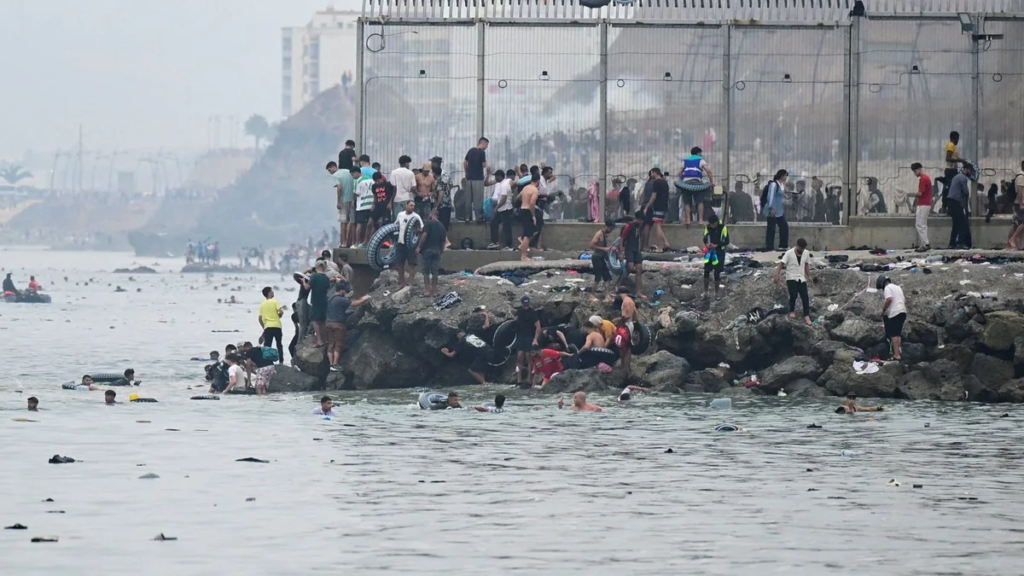
“Among these was the fact that the people-smugglers operating from the lawless zones of the Libyan coastline now no longer had to try to use vessels even as able as those they had been putting out to date. Mare Nostrum had brought the border of Europe even closer to Libya. All that the smugglers now had to do was launch any boat into the water. If it happened to stay afloat the Italian navy would meet it half-way to Lampedusa or sometimes even closer to Libya. If the migrant vessel was seaworthy, the Italian navy would tow it into port at Lampedusa.” (Source: Ibid. p. 58)
“This phenomenon is at least partly caused by NGOs that advocate for any and all migration into Europe as part of the ‘borderless world’ movement. As the flow of migrants grew in the 2010s, some NGO groups decided to help migrants before they even got to Europe. They provided easily accessible information on the web and on phone apps to guide would-be Europeans through the process.” (Source: Ibid. p. 61)
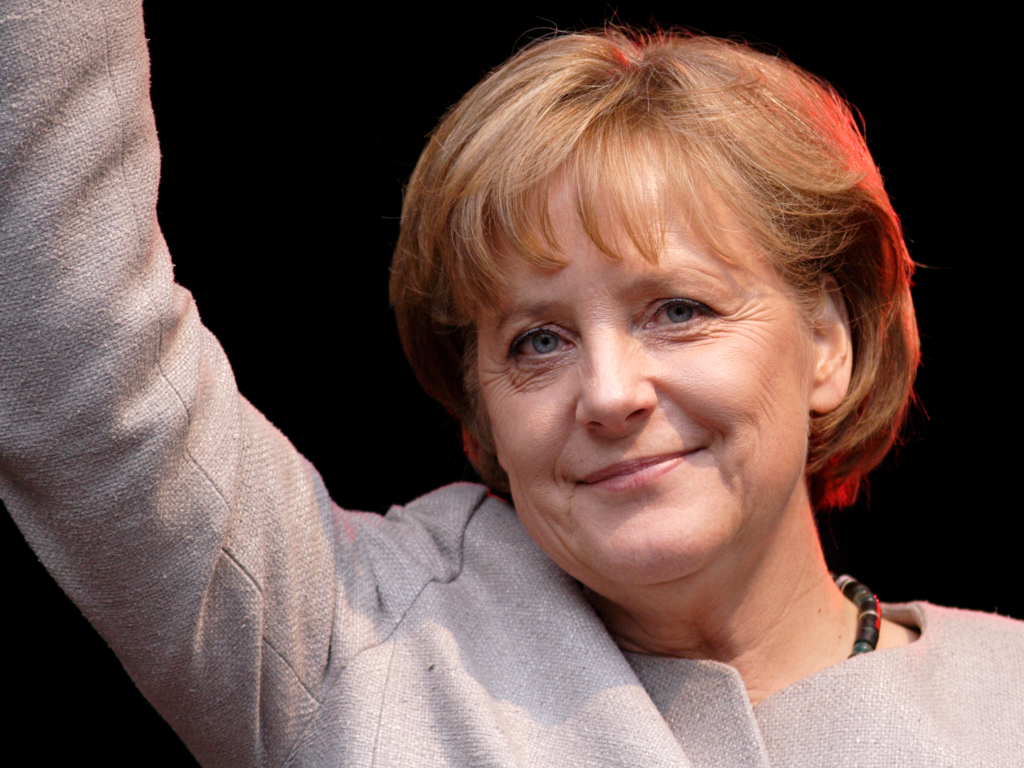
“In her speech in Potsdam she [Angela Merkel] started by referring to the country’s Gastarbeiter programme and the mass movement of Turks and others to live and work in Germany from the early 1960s onwards. She conceded that the country had – like the post-war labour-market immigration in Britain and other European countries – ‘kidded ourselves for a while’. She continued, ‘We said “They won’t stay, sometime they will be gone”, but this isn’t reality.’ It failed to anticipate any of the consequences flowing from the policy. She went on to criticise more current mistakes in the German immigration and integration debate.” (Source: Ibid. p. 79)
“The speech was reported around the world. What made it so newsworthy was that it included the most damning summary by any mainstream politician to date of a European country’s integration failures. Some of it had previously been said on the political margins, but had never been so decidedly voiced in the mainstream. Discussing what had gone wrong between Germany and its immigrants, the Chancellor said, ‘Of course, the approach to build a multicultural society and to live side-by-side and to enjoy each other has failed, utterly failed.’ That was why, she insisted, ‘integration is so important’.” (Source: Ibid. p. 79)
“In 2006 the Dutch Justice Minister, Piet Hein Donner, caused significant anger in the Netherlands when he suggested in an interview that if Muslims wished to change the law of the land to Sharia by democratic means (that is when Muslims were large enough in number), then they could do so.” (Source: Ibid. p. 82)
“In each case the backlash against comments such as these came because of a wider sentiment that in the multicultural era Europe was being expected to give up too much of itself – including its history – while those who had arrived were being expected to give up next to nothing of their traditions.” (Source: Ibid. p. 82)
A Core Culture?
“To varying degrees in each country, the new arrivals were put into towns and suburbs on their own, generally in places where they would work. Even when the work dried up, people coming in from the same communities still tended to move to the areas where other people of their background lived. If they were not always encouraged to do so, certainly there was little effort to discourage them from doing so. Governments were subsequently blamed for the segregation, but many of the immigrants self-segregated through a perfectly understandable wish to retain their culture and customs in a society that had no connection to them.”(Source: Ibid. p. 87)
‘The Great Replacement’
“This area has one of the highest Muslim populations in France. Around 30 per cent of the population of Seine Saint-Denis, also known as the 93rd district, are Muslim. No more than 15 per cent are Catholic. But with most of the immigrants in the area from the Maghreb and sub-Saharan Africa and a growing youth population, it is not surprising that even in the district’s private Catholic schools around 70 per cent of the students are Muslim. Meanwhile the area’s Jewish population has halved in recent years. According to the Interior Ministry the district has around 10 per cent (230) of the total number of known mosques in France.” (Source: Ibid. p. 91)
“When labour in the Netherlands was scarce, in the 1960s, immigration into the country had mainly come from Morocco and Turkey. The immigrants brought their wives and families and by the 1990s the continuing immigration and higher birth rates among these communities meant that they were growing at a faster rate than any other community in the country.” (Source: Ibid. p. 110)
“In 2003 a report into anti-Semitism by the European Monitoring Centre was quietly shelved when it found that the upsurge in anti-Semitic activity in Europe was caused by a rise in attacks on Jews by young Muslims. Yet despite such attempts to cover over the facts, the facts kept on breaking out – often in the most brutal ways possible. In 2006 there was horror in France when a French Jew called Ilan Halimi was tortured to death over the course of three weeks by a gang of Muslims in Paris who called themselves ‘the barbarians’. His torturers believed they could get money out of Halimi and his family because ‘Jews have money’.” (Source: Ibid. p. 116)
The Stain Of Europe
“Contemporary Europeans may not be the only people in the world to feel they have been born into original sin, but they certainly appear to suffer from the worst case of it. Today’s Europeans expect themselves, long before anybody else raises it, to bear specific historical guilt that comprises not only war guilt and Holocaust guilt, but a whole gamut of preceding guilts. These include, though are by no means limited to, the abiding guilt for colonialism and racism. And although all of this adds up to a hefty burden, it is no longer one we are expected to bear alone. In recent decades the same blackmail from history that has afflicted modern Europe has also been assumed by a group of noticeably homogeneous nations.” (Source: Ibid. p. 132)
“But then the argument [welcoming immigrant masses] changed. The media across the globe were already describing Europe as ‘buckling’ under the strain of the new arrivals when, on the evening of Friday 13 November, Paris was rocked by three hours of coordinated terrorist attacks. Gunmen in a car using assault rifles drove by and shot at Parisians as they were eating and drinking in bars and restaurants. At the same time suicide bombers struck at the Stade de France stadium in Saint-Denis where President Hollande was among the crowd watching a football game. As well as further shootings and a suicide bombing at more restaurants, three gunmen entered the Bataclan theatre concert hall on the Boulevard Voltaire. While more than a thousand people were listening to a heavy-metal concert the attackers started firing assault rifles and gunned down as many people as they could. They lined up the wheelchair users in the disabled section of the theatre and shot them one by one. Elsewhere they roamed through the building hunting down people where they lay wounded or hiding. The men continued to shoot people throughout the theatre until the police arrived, at which point the gunmen detonated suicide vests. By the end of the evening in Paris 129 people had been killed and many hundreds more were wounded.” (Source: Ibid. p. 151)
“The following day one Mohamed Boufarkouch shouted ‘Allahu Akbar’ (‘Allah is the greatest’) and stabbed a Frenchwoman and her three daughters (aged 8, 12 and 14) near Montpellier in France, apparently for dressing ‘immodestly’. The perpetrator had been born in Morocco.” (Source: Ibid. p. 157)
“A couple of days later a Syrian asylum seeker used a machete to hack a pregnant woman to death in Stuttgart in what was reported to be a crime of passion. The next day another Syrian asylum seeker, Mohammad Daleel, was turned away from a music festival in Ansbach, Bavaria, because he did not have a ticket. It turned out that he was carrying a bomb packed with nails and screws, which he eventually detonated outside a wine bar.” (Source: Ibid. p. 157)
What Might Have Been
“With the right political and moral leadership this could all have worked out differently. Chancellor Merkel and her predecessors would not have been unsupported or unaided had they taken a different set of steps from the beginning. They could have started by asking themselves the question Europe never did: should Europe be a place to which anybody in the world can move and call themselves at home? Should it be a haven for absolutely anybody in the world fleeing war? Is it the job of Europeans to provide a better standard of living in our continent to anybody in the world who wants it? To the second and third of these questions the European publics would have said ‘no’.” (Source: Ibid. p. 239)
“It is also worth considering what – on the current performance of Europe’s politicians and the attitudes of its populations – are more likely scenarios than the one set out in the last chapter. For instance, it would seem far more likely that rather than massive U-turns occurring, politics across Europe will instead continue in the coming decades much as it was up until now. There has been little meaningful acknowledgement among the political class that what it has done during the decades of mass immigration is in any way regrettable. There is no evidence that they would wish to reverse that policy. And there is a great deal of evidence to suggest that they could not do so even if they wished to. The events of 2015 onwards have merely sped up a process that had long been underway.” (Source: Ibid. p. 250)
Further Reading
- Link for downloading a copy of The Strange Death of Europe free of charge: https://ia902801.us.archive.org/16/items/thestrangedeathofeuropeimmigrationidentityislam/The%20Strange%20Death%20of%20Europe%20-%20Immigration,%20Identity,%20Islam.pdf
- Why Germany’s Deportation System Is Failing Everyone: https://www.spiegel.de/international/germany/why-germany-s-deportation-policy-is-failing-everyone-a-1256414.html
- Germany spent record €23 BILLION on refugees and migrants in 2018: https://www.rt.com/news/459799-germany-migrants-cost-integration
All content on this website is copyrighted, and cannot be republished or reproduced without permission.
Share this article!


The truth does not fear investigation.
You can help support Dominion Review!
Dominion Review is entirely funded by readers. I am proud to publish hard-hitting columns and in-depth journalism with no paywall, no government grants, and no deference to political correctness and prevailing orthodoxies. If you appreciate this publication and want to help it grow and provide novel and dissenting perspectives to more Canadians, consider subscribing on Patreon for $5/month.
- Riley Donovan, editor