
Introduction
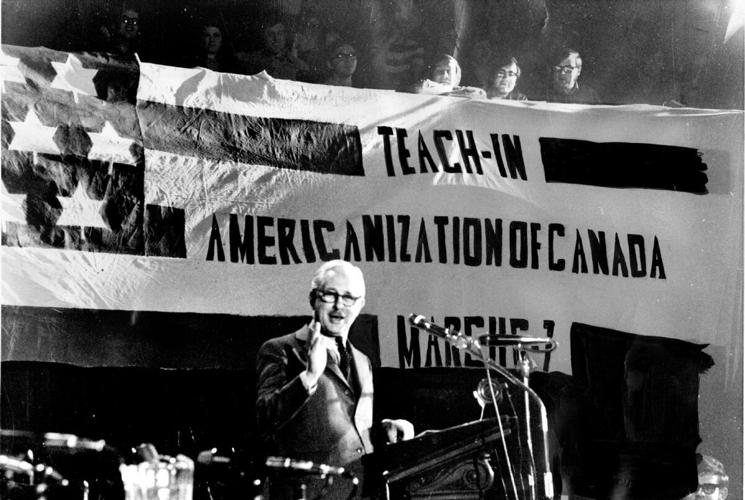
In preparing this article I am indebted to Professor Kari Levitt on whose pioneering work, Silent Surrender (1970), I have relied for the information on how multinationals operating in Canada have undermined Canadian sovereignty.
Silent Surrender, which is a monumental work on political economy of Canada, was not well received by orthodox economists.
To illustrate the mindset of economic orthodoxy, I wish to describe an encounter of many years ago with an orthodox economist when I was in my earlier years of teaching at an academic institution of higher education. One day, as I was passing by the office of the economist – who was also teaching at the same institution – he called me to come in and told me I have been misleading “his” students, which meant students we had in common, by teaching that the resources of the earth are finite. He opened a paperback on economy published in the United States, put his finger on a page and said look here. The page said there are 900 million tons of copper, 1200 million tons of iron and 800 million tons of other metals under every square mile of the earth. I said “How deep do you have to go to access these quantities of metals, to the molten core of the earth? Even if someday the technology existed to extract that deep, do you realize that no businessman would extract anything if the cost of extraction exceeded many times the market value of what is to be mined?” He slammed the paperback on his desk and said “It is impossible to argue with you!”
*****
“It is Canadian savings that have financed much of the foreign investment which then has to be serviced indefinitely; relevant data are cited by Professor Levitt. Put differently, the multinational corporation is more certainly a means to drain surplus than to create it.” (Source: Silent Surrender)
“This book presents a sketch of Canada’s slide into a position of economic, political and cultural dependence on the United States. It seeks to explain the process whereby national entrepreneurship and political unity have been eroded to a point beyond which lies the disintegration of the nation state. Those of my colleagues who believe that understanding is advanced primarily by the accretion of factual information will perhaps be disappointed by the absence of “original research.” Those, however, who share the view that further research on the effects of direct foreign investment is unlikely to yield additional insight unless accompanied by a more relevant intellectual framework—or, to use the academic jargon, a more illuminating model—may find the ideas developed here useful in posing new and meaningful questions.” (Source: Silent Surrender)
“The conflict between the imperatives of the multinational corporation and the sovereignty of the nation state is being recognized by an increasing number of scholars and political figures.
The best-known prophet of the trend is probably Mr. George Ball, former U.S. Under Secretary of State, who declared that the nation state is a very old-fashioned idea that would have to yield to the multinational corporation, which is a modern concept designed to meet the requirements of a modern age. The threat to the nation state is real, since some corporations are larger than many contemporary countries. Concern for the protection of the sovereignty of the nation state is depicted as retrogressive flag-waving nationalism. But such concern is totally justifiable, involving as it does the primacy of the citizen and the political institutions within which he may hope to control his environment over the concentration of corporate power.” (Source: Silent Surrender)
“In Canada economic resources are allocated primarily to suit the requirements of large private corporations, and the majority of these are under United States control. The constellation of the old east-west economy and strong central government has largely been destroyed by the economic forces of corporate continental concentration and corresponding regional political fragmentation. The Canadian entrepreneurs of yesterday are the coupon clippers and hired vice-presidents of branch plants of today. They have quite literally sold out the country.” (Source: Silent Surrender)
“Some sixty years ago Sir Wilfrid Laurier declared that the twentieth century belongs to Canada. By the middle of the century it had become clear that Canada belongs to the United States. Indeed Canada provides a dramatic illustration of the stultification of an indigenous entrepreneurial class and the regression to a condition of underdevelopment in spite of continuous income growth.” (Source: Silent Surrender)

“American companies long ago developed the techniques of internal self-financing. When they go “international” they finance the major part of expenditures on continued foreign expansion from the domestic savings of the hinterland countries.
The capital consumption allowances and retained earnings of foreign subsidiaries are at one and the same time the internal savings of the corporations and the domestic savings of the host countries.” (Source: Silent Surrender)
“It is becoming clear that the international corporations would find it profitable to impose on the world an “internationalism” which would break down all possible cultural, institutional and political barriers to their unlimited expansion.” (Source: Silent Surrender)
“It has been said that the old colonialism brought the bible and took the land. It imposed Christianity and carried off the wealth of the Indies, the Americas and Africa. The new colonialism is carried by the ideology of materialism, liberalism—and anti-nationalism. By means of these values they seek to disarm the resistance of national communities to alien consumption patterns and the presence of alien power.” (Source: Silent Surrender)
“The point is made succinctly by the authors of a book published by the International Economic Policy Association, on the U.S. balance of payments. ‘Without the income from U.S. direct investments abroad, it is doubtful that the U.S. would be able to meet its world-wide military, political and economic commitments. In return, the investments of the citizens of the metropolitan country are protected by the political and military strength of their government.’ ” (Source: Silent Surrender)
“America’s closest friends have been harnessed in the effort to finance the rising costs of empire. Canada, which has contributed more than any other country to the overseas expansion of U.S. corporations, and whose share in world trade of manufactured goods has declined in the past decade, agreed to restrict its official exchange reserves no matter what the cost in terms of inflationary pressures. Heavily geared to the continuing inflow of American capital, Canada is highly vulnerable to a reversal in the established patterns of capital investments in the service of protection of the U.S. balance of payments and the U.S. dollar.” (Source: Silent Surrender)

“The large volume of foreign investment in Canada seems to suggest a shortage of Canadian entrepreneurs. But which is cause and which is the effect? We usually think of foreign investment as a consequence of a shortage of domestic entrepreneurs, but perhaps the former has helped to create the latter.
Suppose, in the extreme case, Canada forbade all foreign direct investment. This would certainly slow down the flow of technology and create a gap between techniques used in Canada and the best available technique elsewhere. What would happen then?
Through time the gap would grow and there would be an increasing incentive for Canadians to learn how to breach it. Might not this stimulate a growth of Canadian entrepreneurship? Once over their initial learning period, might not Canadian entrepreneurs be able to stand on their own feet? The shortage of entrepreneurs in Canada might disappear and with it the need for so much foreign investment.
“A branch-plant economy dependent on imported technology is assured of a perpetual technological backwardness vis-a-vis the metropolis. The branch-plant economy thus chokes the development of local capitalists and inhibits the development of a local capital market.” (Source: Silent Surrender)
“The increase in foreign investment which occurs in the hinterland when subsidiaries finance expansion from retained earnings can have a serious impact on the current balance of payments situation in the event that the corporations decide to transfer capital out of the country. Such transfers may take the form of heavy payments of dividends to parent companies, repayment of loans to parents, a halt to reinvestment, or even a liquidation of reserves held by subsidiaries.” (Source: Silent Surrender)
“The international corporations have evidently declared ideological war on the “antiquated” nation state. George Grant’s charge that materialism, modernization and internationalism are the new liberal creed of corporate capitalism is a valid one. The implication is clear: the nation state as a political unit of democratic decision-making must, in the interest of ‘progress,’ yield control to the new mercantile mini-powers.” (Source: Silent Surrender)
“As technology is harnessed to the requirements of the corporate system an unknown amount of risk is incurred in upsetting the ecological balance of the planet. Concern over the consequences of alienating man from his natural and human environment range all the way from the ‘normal’ daily pollution of air and water to the destructive possibilities inherent in the existence of vast stockpiles of chemical and biological killing-power; all the way from the ‘normal’ incidence of violent crime, suicide and personal insanity to the irrationalities of organized genocide and the rise of racial conflict and confrontation the world over.” (Source: Silent Surrender)
“The Harvest of Lengthening Dependence After twenty-five years of heavy American direct investment Canada’s freedom of action has been progressively restricted to the point where it is doubtful whether it can be regained. The loss of sovereignty is most evident in the matter of ‘extra-territoriality.’ When the metropolitan government insists on the primacy of its law over subsidiaries located in hinterland countries there is a direct conflict of jurisdiction. The threat to the sovereignty of Canada thus takes the form of a threat of absorption into the American empire.” (Source: Silent Surrender)
“In the key sectors of the Canadian economy, decisions concerning what is to be produced, where it is to be sold, from whom supplies are to be purchased and what funds are to be transferred in the form of interest, dividends, loans, stock purchases, short-term balances, charges for management, research or advertising services, and so on, are made externally in accordance with considerations of global strategy of foreign corporations. It should be noted that the foreign exchange earned by these defence exports is pre-empted by the undertaking of the Canadian government to purchase American war supplies. Thus in 1966 Canadian defence purchases in the U.S. amounted to $332.6 million.” (Source: Silent Surrender)
“The most bitter harvest of increasing dependence and diminishing control may yet be reaped in the form of the internal political balkanization of Canada and its piecemeal absorption into the American imperial system. The final outcome of a branch-plant society is a merging of value systems and a meshing of corporate and technocratic elites which must ultimately call into question English Canada’s willingness to pay the price of continued independence.” (Source: Silent Surrender)
“Hitched to an east-west spine of trade and investment, the Canadian nation found strength to resist American annexationist pressures in the might of the pound sterling and in British imperial power. For decades Canadian politicians refined the techniques of compromise and survival. Externally, they maneuvered between the British and the American metropolis. Internally, French-Canadian national survival was guaranteed by the powers exercised by the Catholic Church and the isolation of French Canada from modernizing influences.” (Source: Silent Surrender)
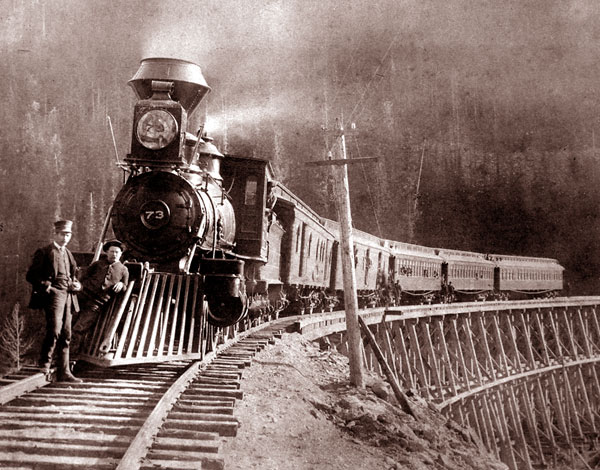
“The passing of time has eliminated Britain as a significant factor in Canadian politics. The problems are more difficult than they were in 1867 and the structures appropriate a hundred years ago are plainly obsolete today. The English-Canadian elite are no longer sure where they are going. Compromise and accommodation are useful political techniques for a small or middle power that knows what it wants, and can navigate the cross-currents created by stronger external powers. But compromise and accommodation as an operating philosophy of a community that does not know what it wants, in a situation in which the current runs powerfully in one direction, can lead only to drift and eventually to disintegration.
It is clearly no longer in the interests of the economically powerful to be nationalists. As George Grant has said: ‘Most of them made more money by being the representatives of American capitalism and setting up branch plants. . . . Capitalism is, after all, a way of life based on the principle that the most important activity is profit-making. That activity led the wealthy in the direction of continentalism.’ (Source: Silent Surrender)
“Respect for law and order, regard for civil rights, abhorrence of mob rule and gangsterism (whether practised at the bottom or the top of the social scale), and traditional respect for Ottawa as the national government of the country are still deeply felt in English Canada. These are the elements of English-Canadian patriotism and they define the English Canadian, as distinct from the American. This value system is as real as the branch plants. It is the source which nourishes English-Canadian nationalism, and it is reinforced by every action of the United States which violates these values.
Whereas these values were created by the older Canadian elite, which shaped the nation, the existing business class cannot give effective expression to Canadian nationalism because it has been absorbed into the world of corporate empire. It rejected John Diefenbaker because he was a nationalist; it rejected Walter Gordon for the same reason. Grant has observed that the power of the American government to control Canada lies not so much in its ability to exert direct pressure as in the fact that the dominant classes in Canada see themselves at one with continentalism.
The effect of the American corporate presence on relations between central and provincial governments is clear; the linear transcontinental axis, which once integrated the nation under an active and strong central government, has largely disintegrated. The new pattern of north-south trade and investment based on resource development and branch-plant manufacturing does not require a strong central government. The central government is left to manage the old infra-structure of communications and commercial institutions carried over from the previous era.” (Source: Silent Surrender)
“The locus of decision-making has been transferred from Canada, where in the past it was subject to strong direction by the federal government, to the board rooms of huge U.S. corporations, operating on a world scale and each charting its own future under the protection of its metropolitan government.” (Source: Silent Surrender)
All content on this website is copyrighted, and cannot be republished or reproduced without permission.
Share this article!


The truth does not fear investigation.
You can help support Dominion Review!
Dominion Review is entirely funded by readers. I am proud to publish hard-hitting columns and in-depth journalism with no paywall, no government grants, and no deference to political correctness and prevailing orthodoxies. If you appreciate this publication and want to help it grow and provide novel and dissenting perspectives to more Canadians, consider subscribing on Patreon for $5/month.
- Riley Donovan, editor