
Up nearby the newspaper I write for in Atikokan, Ontario, there is an upstart gold mine run by a company called GoldX2. On February 5th, 2026, CEO Michael Henrichsen announced the discovery of two “mineralized shear zones” two kilometres south of their main site, in the midst of an “aggressive exploration program”. This discovery expanded on over 3.5 million ounces in payable production already indicated. Due to ongoing findings within the area of “Reasonable Prospects of Eventual Economic Extraction” (RPEEE), the exact lifespan of the mine site, as well as total extraction, is currently unknown. Also unknown, based only on rough estimates of future conditions, is profitability.
In February, 2021, the price of gold was little over $1,700/oz USD. Five years later, the price sat somewhere just over $5000/oz, marking a 200% increase (about 100% increase adjusting for general inflation). Similar five-year runs are noticeable throughout gold’s modern asset history. From 2006 to 2011, the metal went from $600/oz to $1800/oz. Extraordinarily, what was $35/oz in 1970 (at the end of the American gold standard period) had reached $180/oz by 1975. Gold mining firms – and their surrounding communities – have always benefitted from periods of intense price hikes. Red Lake Ontario, for instance, is in the midst of a “boom” partially due to current conditions.
Typically, mining companies remain conservative with their estimates. Despite the present market, Gold X2 bases its “long term consensus” cash flow projection on a $3,137/oz price, close to 40% below current value. Even at a “base case” price of $2,750/oz, the company would still retain over $4 billion in free cash flow at the end of the project.
Additionally, the company is “not aware of any environmental, permitting, legal, title, taxation, socio-economic, marketing, political, or other relevant factors that could materially affect the Mineral Resource estimate”. In other words, GoldX2 is confident that the price of gold will not drop far below their base estimate, and consequently render the project non-profitable. Of course, any drastic movement in either direction would affect the future scope of the project – the company says that “pit selection, cut-off grade and processing schedules are based on a US$2,000/oz gold price and would likely be redesigned to optimize for significantly higher or significantly lower fold price scenarios”.
Using standard market logic, an observer may assume that gold’s recent surge would trigger boosts in production and supply. This logic, however, is faulty because it does not consider natural restraints. According to a January 7th article by the World Gold Council, it has become more difficult to “find, gain permits for and construct new mines with major discoveries steadily declining”. Consequently, the authors assert that “global gold mining production may be nearing its peak”.
Due to these factors, as well as the metal’s increasing use in various consumer products, many financial analysts predict prices to remain steady, if not grow, in years to come. J.P. Morgan, for instance, predicted that gold would sell at over $5,000/oz until at least Q4 of 2027, in research published in December 2025. “Underpinning J.P. Morgan Global Research’s price forecasts”, they wrote, “is continued strong investor and central bank gold demand”. Specifically, central banks from across the world are expected to purchase around 755 tonnes in 2026, lower than peak levels over the last three years (1,000+ tonnes), but still far above pre-2022 averages (400–500 tonnes). There is one particularly important outlier in this general trend, however: The Government of Canada.

A Half Century of Bank of Canada Policy
While central banks existing in political/economic contexts as distinct as Poland, China, and Ethiopia currently pursuing an aggressive expansion of gold reserves, the Canadian Ministry of Finance (MoF), along with the Bank of Canada (BoC), have remained consistent in their position that precious metals are not an appropriate asset for the federal government to hold. Last October, an MoF spokesperson told the Financial Post they believe “holding high-quality, interest-bearing foreign-currency assets is better suited than gold”, assets such as US dollars or treasury bonds.
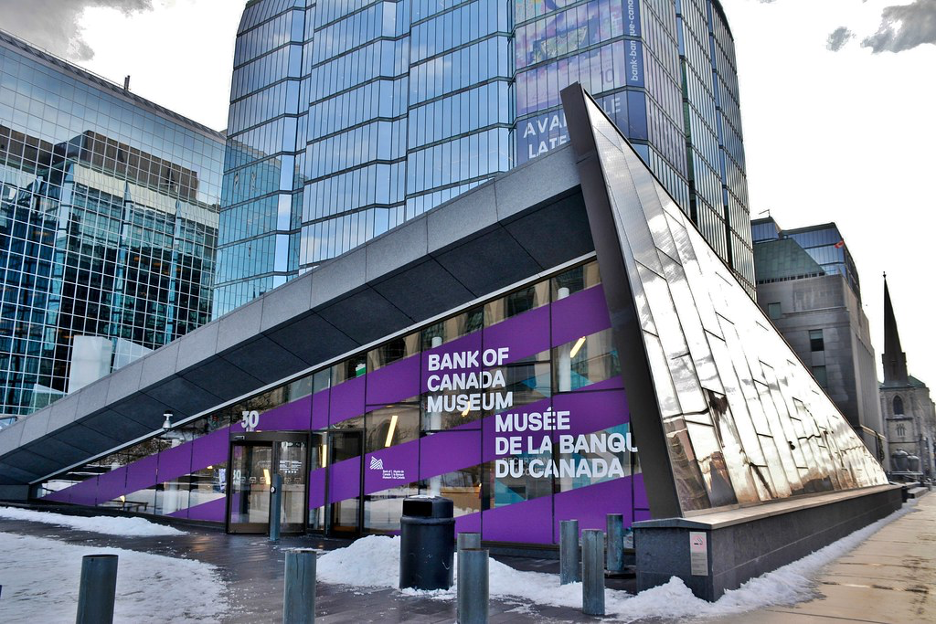
In 1965, the BoC held approximately 1025 tonnes valued then at $1.1 billion, a weight now worth roughly $150 billion (For reference, Canada produced 200 tonnes of gold in 2025 – an all-time high – out of an approximate 3,600 tonnes mined globally). But during the multi-faceted societal paradigm shift of the late 1960s/early 70s, the government’s perspective on gold reserves began to change. This was triggered in great part by the American decision in 1971 to go off the gold standard, which had guaranteed the availability of bullion at a conversion rate of $35/oz since the famous Bretton Woods conference of 1944. After this, gold was no longer (at least, officially) at the heart of the global financial system, replaced thereafter by USD and oil (i.e. ‘Petrodollar’).
Gradually declining throughout the 1970s and 80s, Canadian reserves plummeted in the 1990s and early 2000s, with the last bullion sold in 2003. This was a period of balanced and surplus budgets, when various assets were sold (ex. Petro Canada, Canadian National Railway) in the name of fiscal responsibility. It was also a period of relatively low gold prices. In 2016, the last remaining coins were liquidated, and Canada entered into the rather unprecedented position of owning zero tonnes, ounces, grams, etc.
In February 2019, then BoC deputy governor Timothy Lane spoke to a crowd in Washington D.C about Canada’s approach to foreign reserve management, explaining that “Gold bullion is not considered as liquid as, for example, US Treasury securities and, to the extent that physical delivery may be involved, could entail significant costs for secure transport and storage. As such, gold doesn’t fit well within the asset-matching framework”. In a similar vein, a MoF representative told CBC in 2016 that “the government has a long-standing policy of diversifying its portfolio by selling physical commodities (such as gold) and instead investing in financial assets that are easily tradable and that have deep markets of buyers and sellers”.
Storage costs, liquidity, and interest-bearing assets – these explanations suggest an economic philosophy that prioritizes short-term cash flow. Contrary to the ancient kings of Israel and Babylon, the European empires led by Louis XIV and George III, and essentially every middle-to-great power on earth today, the Canadian government seems to have believed that bullion reserves were of little to no national, political importance, then and for the decades to come.
Hindsight is 2020(6)?
From the vantage point of 2026, this half-century long policy agenda feels hard to come to terms with. Was the choice to sell truly because of the hazardous elements of investment into physical metals? If so, there must be a reason why Canada’s national aversion differs so drastically from many allies and geopolitical rivals alike. In a world of “industry-standards”, this policy seems anything but.
There also must be a conversation about how the value of gold is conceived. Although at times quite profitable, the purpose of owning physical metals of any kind is, in the case of the government, not about maximizing a portfolio’s rate of return ratio. It is, instead, about upholding the legitimacy of national currency against forces that wish to undermine it, and underpin sovereignty with a sense of intrinsic value. Gold is an asset nations can actually touch and depend upon, providing basic guarantees against the threat of sanctions, asset-freezing, and international monetary collapse/reorientation.

Could it be that the federal government believed gold ownership to be unnecessary because Canada has so much in the ground? That, in a time of emergency, the resources underneath greater Sudbury or Red Lake could be temporarily nationalized, or bought at a discount? If so, it would certainly be news to companies like GoldX2, which expect political stability to remain consistent during the entire span of their operation. Furthermore, it should be remembered that the last time there was an attempt to publicly manage the production of a natural resource industry, a crisis of national unity emerged (i.e. the National Energy Program).
The federal government should reconsider its stance on gold ownership, in spite of the financial sacrifices that inevitably come with storage. Otherwise, there must be an explanation as to what makes Canada so uniquely confident in its empty-vault status. If the MoF is under the strange impression that the political conditions of the 1990s are the same as today, or that these conditions were in any shape or form historically normal in the grand scope of human civilization, then they ought to be briefed on contemporary US relations, or review the age-old strategies of economic statecraft, respectively. Furthermore, if the Prime Minister is serious about survival within what he has called “the New World Order”, then his government must examine the validity of this long-standing bi-partisan policy.
Originally published in the Atikokan Progress.
All content on this website is copyrighted, and cannot be republished or reproduced without permission.
Share this article!

The truth does not fear investigation.
You can help support Dominion Review!
Dominion Review is entirely funded by readers. I am proud to publish hard-hitting columns and in-depth journalism with no paywall, no government grants, and no deference to political correctness and prevailing orthodoxies. If you appreciate this publication and want to help it grow and provide novel and dissenting perspectives to more Canadians, consider subscribing on Patreon for $5/month.
- Riley Donovan, editor