
When I was a kid in the 1960s, my mother took me to see a really funny movie titled The Russians are coming, the Russians are coming. It was directed by that great Canadian, Norman Jewison, who I had the pleasure to meet once, because I became friends with his kids through a mutual friend. The movie had a wonderful cast that included Alan Arkin and Carl Reiner.
The movie was about a Russian sub running aground on an island in the New England part of the US – the sub was not nuclear powered or equipped with nuclear weapons. Comedy ensues as the Russians need help freeing their boat and the small population of Americans mistakenly believe that the Russians are invading their island as part of the Cold War conflict between the superpowers. Spoiler alert – in the end the townsfolk help the hapless Russians escape with their lives in the sub when the US military tries to wipe them out. Very Canadian of the New Englanders, but then it is Norman Jewison making the movie.
Now, imagine the same movie being set in our Arctic islands. The Russians would be lucky if there was a tiny settlement within 100 miles – they would likely freeze to death before even getting halfway there. It would be hard enough to even make the movie outside of two or three towns. Unless there was another Russian sub nearby, they would likely be found by NORAD long before any help came.
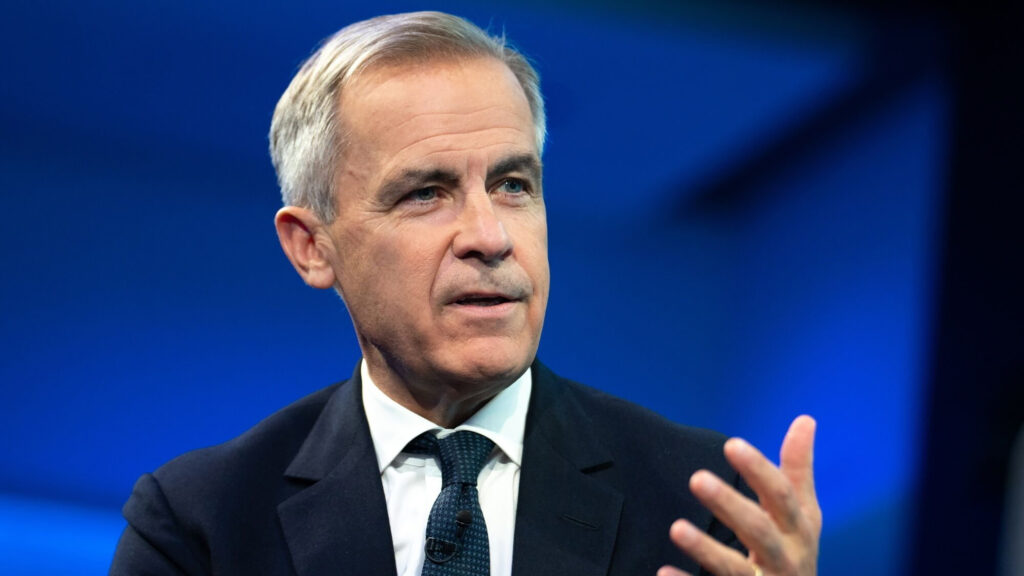
I thought of this movie when PM Mark Carney announced he plans to spend $35 billion on our Arctic (or just $32 billion according to some media reports) – though some of this commitment dates back to Justin Trudeau. It includes things like building the Mackenzie Valley Highway to Inuvik, which may make perfect sense regardless of Trump, Russia, China or other threats to Canada.
But stop and do the math here: $32 billion spent on 140,000 people in three territories? That works out to $230,000 per person, or close to a quarter of a million dollars for every inhabitant in the region.
Even $32 billion spent on 41.5 million people, the total population of the whole country, is still $770 per person.
This is on top of the other subsidies the South sends up North, since most supplies are flown in, with maybe one or two ships a year. And then we are spending billions on 12 submarines, icebreakers, and more – mostly to patrol the North.
A guy on CBC was saying that our economic future is in the North, and for this claim he mainly cited natural resources. However, the federal government is transferring substantial control over resources to the Indigenous peoples of the North.
To use Nunavut as an example, a large chunk of ownership was transferred to the Indigenous people in 1993. In 2027, land and resources decisions, as well as royalties, will be transferred to the territorial government (“devolution”), much like in the ten provinces. This means the federal government will only collect limited revenue from the North, while incurring massive costs for defence, as well as other subsidies not given to people in Southern parts of the country.
We are told that Arctic “sovereignty” is a major issue, but I do not see how Canada could get the US and other countries to accept that the Northwest Passage is our internal waterway. Further, no foreign nation is going to invade the North and set up towns and military bases, when the Antarctic still has parts unclaimed. Russia, one country floated as a potential invader, is twice Canada’s size and has even more untapped minerals than we do.
So, let’s be clear – the Russians aren’t coming, the Russians aren’t coming!

Ukraine has been decimating the Russian bomber fleet. Russia has been beefing up its fleet of icebreakers and focusing more on their Arctic capabilities, but this is to bolster their Northeast Passage and access to their northern ports for resource development. It is not because they are planning to invade our waters, though Russia is trying to claim as much of the Arctic Ocean as it can.
The Cold War is over, and Russia and China are not going to bomb or invade us, though they are our adversaries in other ways. In fact, this is what CSIS itself thinks.
A February 13th article in the National Post titled “CSIS officials say China is more of a concern in Canada’s Arctic than Russia” included the following:
“While Russia remains a military threat in the Arctic, Canada’s security officials told a House of Commons committee this week that they remain primarily focused on China’s threats to economic security in the North.
‘Russia has a tremendous interest and focus in the Arctic,’ Paul Lynd, assistant director at the Canadian Security Intelligence Service (CSIS), told the foreign affairs committee on Thursday. ‘However, they are of less concern than, say, the activities of China and other hostile state actors at this time.’
Lynd told the committee CSIS has recently stepped up its engagement with Indigenous communities, territorial and municipal governments in northern Canada to help mitigate China’s foreign interference and economic espionage in the region.
‘I would say now, our primary concern about the threat in the Arctic falls under economic security,’ said Lynd. ‘It’s foreign interference in our economic sector.’
Lynd said this would include predatory investment, attempts at control in the critical minerals sector and China’s attempts to gain footholds in critical infrastructure.
‘The concern we have would be with clandestine or deceptive investment practices or economic engagement in certain market sectors in the Arctic,’ he said. ‘From a CSIS perspective, we investigate, collect information on that, and we advise government on the rest of the threat.’
Lynd said this is achieved through the Investment Canada Act (ICA), which is legislation that allows the federal government to conduct a national security review of any foreign investment. The federal government has used the ICA before to protect Canada’s national security interests in commercial fields.”
The article goes on to state the following about the Carney government’s approach to China:
“Lynd’s warning comes just a month after Prime Minister Mark Carney signed a new ‘strategic partnership’ with President of the People’s Republic of China Xi Jinping that encourages more two-way investment and trade between Canada and China. The agreement also allows 49,000 Chinese electric vehicles into Canada’s car market at smaller tariff rate [sic], in exchange for Chinese tariff relief on Canadian canola and seafood exports.
A recent report by Toronto-Dominion Bank estimates China’s foreign direct investment in Canada will grow to around $90-100 billion over the next five years, with $15-25 billion more investment thanks to the agreement.
While Carney’s government has signalled it would like to see more Chinese investment in the oil and gas sector, agri-food and technology, more sensitive sectors like critical minerals, artificial intelligence and telecommunications will likely be constrained under the ICA.”
Unfortunately, Canada has a terrible track record of signing trade related deals that adequately protect Canada’s interests. The 2018 renegotiation of CUSMA is a good example, and Canadian trade experts like lawyer Barry Appleton are pretty scathing about it.
Canada also does a terrible job of policing agreements and strictly enforcing them. Lastly, China is quick to retaliate whenever we do stand up to them, despite the fact that Canada imports nearly twice as much as we sell to China, so they benefit far more from exports than we do.
The Carney government has been busy trying to counter Donald Trump’s punitive treatment of Canada and our exports, meaning that Carney has been jetting around the globe signing various trade deals and trying to mend relationships that suffered during the Justin Trudeau years.
At the same time, Carney is also committing Canada to massive levels of spending, particularly on defence, on top of the existing deals such as the purchase of 88 F-35 jets and the River-class destroyer program, as part of a commitment to spend 5% on defence (though 1.5% can be in infrastructure or other things indirectly tied to defence).
Canada is an overwhelmingly urban country, with most of our population living along the Southern border. Frankly, spending on AI, robotics, and high tech, or reducing foreign ownership and control of our economy, would do more for our economic future than spending so much money on the North.
The main bright spot is actually in defence and the potential for exporting weapons or equipment. Canada should learn from South Korea, Israel, and other countries, including embattled Ukraine, in building up our own corporations with the ability to research, develop and manufacture advanced weapons systems.
All content on this website is copyrighted, and cannot be republished or reproduced without permission.
Share this article!



The truth does not fear investigation.
You can help support Dominion Review!
Dominion Review is entirely funded by readers. I am proud to publish hard-hitting columns and in-depth journalism with no paywall, no government grants, and no deference to political correctness and prevailing orthodoxies. If you appreciate this publication and want to help it grow and provide novel and dissenting perspectives to more Canadians, consider subscribing on Patreon for $5/month.
- Riley Donovan, editor