
The world has changed a lot over the last 30 or 40 years, but in the last two years, I have begun to think that Canadians have not fully grasped this. This is particularly the case for our leaders, thinkers, and people of influence who still have an outdated mindset which the election of Trump in 2016, and particularly his election a second time in 2024, should have knocked out of their heads as hard as an anvil landing on Wile E. Coyote’s head.
Donald Trump wants to go down in history as a “consequential” president, and it looks like he will get his wish, particularly in his destruction of the US role as “Leader of the Free World” and his bungling and incompetence in waging war on Iran. The National Defense Strategy released earlier this year also shows the US under Trump is taking a different direction than US foreign and defence policy since the Second World War.
Trump’s economic policies are just as radical a departure, with his return to McKinley era tariffs and protectionism that the US mostly abandoned after the Second World War.
In both foreign and defence policy on one hand, and on economic and trade policy on the other hand, Trump’s approach is a combination of bullying and transactionality. Trump uses techniques like excessive demands and artificial deadlines, as well as employing all leverage at his disposal, combined with lying, misinformation, and plain BS, to get one-sided deals for the US (and his own family interests) on trade, and also in other disputes (though these have failed with Iran). Trump plays dirty, and only if an opponent has leverage can they beat him back, as China did with its near monopoly on rare earth minerals to get Trump to retreat.
Trump ignores or undermines existing laws and agreements without hesitation. The US court system is slow, and the Supreme Court is clearly biased in his favour. The US has undermined the dispute settlement mechanism in the World Trade Organization (WTO), ignores the US and international law, and also doesn’t give a damn about the rules of CUSMA. Even if you get an agreement with Trump, he will just find another way to attack you. He uses salami tactics of winning slice by slice until he has everything. His motto is “win-lose”, and never “win-win”.
Mark Carney came to power promising “elbows up”, but to me he seems to have constantly delayed, retreated, flip-flopped, or caved in against Trump, though Canada is one of the few countries that has retaliated against US economic aggression even a little. Even so, Mark Carney looks more like one of those department store mannequins with no arms found in clothing stores – his elbows seem missing in action.

The US has about 8.2 times our population and a total GDP about 12 times that of Canada. Canada cannot win a trade war, though targeted retaliation can hit soft spots. And Trump’s ignorance of economics or him being a know-it-all means he claims that his tariffs are not hurting Americans. This misinformation, and the lack of profile Canada has in the US media, mean that US public opinion is not pressuring him into settling quickly or on equitable terms.
It does not matter what “cards” we have tried to play against Trump; he wants Canada and other countries to pay tariffs while US goods face no barriers or tariffs. Pierre Poilievre or any other leader would likely have faced the same problem: in a trade war with the US, Canada is at a huge disadvantage.
When asked in January 2025 if he would use military force to annex Canada, Trump replied that he would use “economic force”. Whether he actually believes he can annex us is unclear, but he is using economic force, and we lack the economic force to hold the line.
Meanwhile, Canada has agreed to Trump’s demand that we spend 5% of Canada’s GDP on defence. We are buying 12 submarines from Germany, over the horizon radar from Australia, and either 88 F-35 fighter jets or a mixed fleet that likely includes Gripen jets from Swedish firm Saab.
Canadians are warned that the Russians are militarizing the Arctic, and told that we are slackers not carrying our weight in NATO. But wait a minute, the Trump administration’s worldview is also that Europe, with about 450 million people, is strong enough to defend itself against Russia, with 140 million people (and shrinking every year). The disparity in GDP is even greater, and Russia’s exports are mainly oil and commodities (like Canada’s exports) with the only real exception being military arms.
The US and Canada are the only non-European nations in NATO, and no similar alliance exists in the Pacific to defend Japan, South Korea, Philippines, and other US allies. But Canadian leaders still act as if we are dependent on Europe and the US for defence against Russia, even though the Cold War is over. Russia still has the most nuclear weapons of any nation, but cannot beat Ukraine, and its last aircraft carrier is headed for scrap. The distance from Murmansk to Toronto is 6,300km, and passes over Greenland. The Canadian Arctic has almost no military targets, and Russia has its own Northern Sea Route, and massive amounts of land and resources. Russia and China are major threats to their direct neighbours, but Canada is a backwater to both countries, not really of much more interest than Mexico or New Zealand.
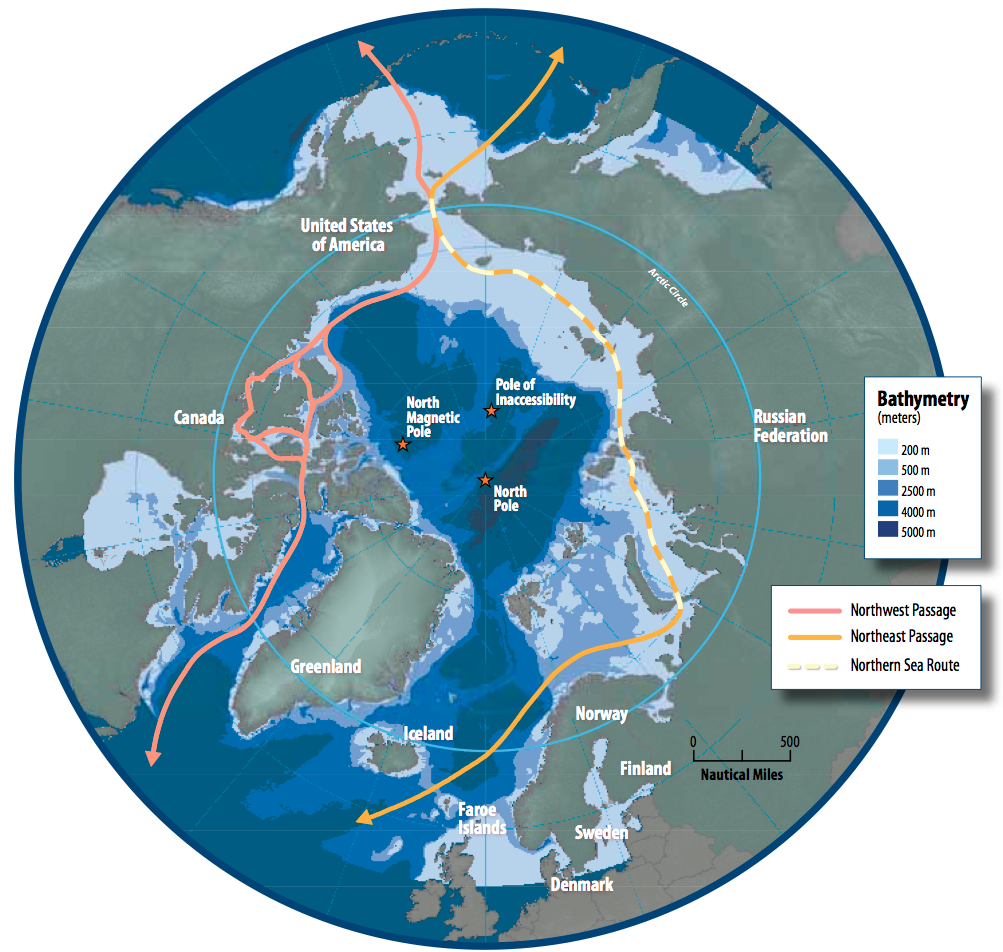
For 35 years, since 1991, Canada has been doing Europe a big favour by staying in NATO, and actually, we are also doing the US a big favour by staying in NORAD. Canada runs a huge trade deficit with Europe, buying twice as much as we sell, and we are not dependent on keeping the North Atlantic open to shipping – they are. It is a one-sided relationship at our expense. But our mindset is still stuck in the Cold War where communism was a global threat to Canada and the US.
Turning to NORAD, we are also doing the US a big favour by our participation in this organization. Trump and his National Defense Strategy place a high priority on continental defence, and his obsession with acquiring Greenland is absurd. He takes it for granted that the US will continue to have the same partnership with Canada and access to our land and waters as the US has had since the Second World War because he, and our leaders, treat defence and trade as separate “files”, or ministries, or silos. Canada can use this as our trump card against Trump.
Canada needs a total reset on both defence policy and trade policy, instead of a relationship where Trump bullies us on trade, while we give him everything he wants on continental defence. The irony is that the third country in CUSMA, Mexico, has no defence partnership or integration with the US like Canada does – they do not have this card to play.
In effect, Canada cannot continue to be victimized by Trump’s economic policies while being a generous and passive partner on defence.
Defence is a major US priority, but Canadians were quite fine with spending less than 2% of our GDP on defence for years because Canada’s higher priorities are the following, in no particular order: prosperity, national unity, protecting or developing a culture and identity of our own, and maintaining sovereignty and democratic control to defend our interests and these other priorities.
Canada will be lucky to get our exports to the US down from 75% to less than 50%. Canada has been signing free trade deals with countries like Chile, Israel, and others for decades, but this has done little to diversify our trade. Additionally, signing onto more trade deals will take away power from our national government and give rights or power to foreign businesses and interests.
Canada need not be as isolationist as Mexico, but our mindset should be adjusted to see ourselves as less connected to the US, less connected to Europe, and more independent – much as Brazil, Argentina, Chile, Mexico, and every other sovereign nation is in this hemisphere.
Canadians have usually had the mindset of us being a sidekick to a bigger power – first the UK, then the US. And we also developed a sense of being a team player, of working with allies. Richard Gwyn referred to Canada as being like a boy scout – by which I think he meant helpful and not motivated by greed or self interest, focused on getting merit badges and being seen as a positive force in the global community.
Canada need not abandon that image of ourselves, but we do need to look at our place in the world in more transactional terms, like the US does, and decide what we want or need for our own continued success and survival. This is particularly the case when we are dealing with an unreliable USA, which so many times since 1776 has not been a benign or positive neighbour. Trump’s comment that he will use “economic force” to annex us is not unexpected – many of us who fought free trade in 1988 worried that the US would gain more power over us and eventually abuse it.
Mark Carney has to go big and announce Canada is also resisting its relationship with the US, and is changing our role. Going big means essentially a declaration from Carney that Canada cannot be an economic enemy/target of the US subject to the whims of the US, while at the same time being a closely integrated military and foreign policy ally of the US.
We have to be partners or work together for mutual benefit on trade, or else we cannot also be allies on continental defence. It should also be emphasized that Canada really ranks continental defence low, our priorities mainly being those that I listed earlier in this article.
The biggest threat to Canada, an “existential threat”, is being too dependent on a fickle US that will bully us and diminish our independence and quality of life bit by bit, and not that we might be physically attacked by Russia, China, North Korea, or anyone else.
Mark Carney was correct in his Davos speech that often the rules and international order created after the Second World War were good, but these rules often did not apply to the biggest powers. Trump has thrown out all the rules. On top of this, in both foreign policy/defence, and on trade and economic policy, Canadians have to reset how we see our place in this new world and how we deal with the US. In fact, we have the power to stop Trump and not keep making concession after concession. It is like Dorothy and the ruby slippers in The Wizard of Oz – we had the power/leverage all along against the US, we just did not realize it. The key is linking these siloed areas of policy, and becoming more transactional in our relations with the US and other countries.
All content on this website is copyrighted, and cannot be republished or reproduced without permission.
Share this article!



The truth does not fear investigation.
You can help support Dominion Review!
Dominion Review is entirely funded by readers. I am proud to publish hard-hitting columns and in-depth journalism with no paywall, no government grants, and no deference to political correctness and prevailing orthodoxies. If you appreciate this publication and want to help it grow and provide novel and dissenting perspectives to more Canadians, consider subscribing on Patreon for $5/month.
- Riley Donovan, editor