
The following are selections from Professor Noam Chomsky’s Media Control. We quote directly from his book in order to retain the clarity and the frank tone of his writing.
****************
“The role of the media in contemporary politics forces us to ask what kind of a world and what kind of a society we want to live in, and in particular in what sense of democracy do we want this to be a democratic society? Let us begin by counter-posing two different conceptions of democracy. One conception of democracy has it that a democratic society is one in which the public has the means to participate in some meaningful way in the management of their own affairs and the means of information are open and free.” (Source: Chomsky’s Media Control, Page 6)
“An alternative conception of democracy is that the public must be barred from managing of their own affairs and the means of information must be kept narrowly and rigidly controlled. That may sound like an odd conception of democracy, but it’s important to understand that it is the prevailing conception. In fact, it has long been, not just in operation, but even in theory. There’s a long history that goes back to the earliest modern democratic revolutions in seventeenth century England which largely expresses this point of view.” (Source: Media Control, Page 7)
[More recently we have the publications of David Rockefeller’s Trilateral Commission warning of “excessive democracy.”]
“Let’s begin with the first modern government propaganda operation. That was under the Woodrow Wilson Administration. Woodrow Wilson was elected President in 1916 on the platform “Peace without Victory.” That was right in the middle of the World War I. The population was extremely pacifistic and saw no reason to become involved in a European war.

The Wilson administration was actually committed to war and had to do something about it. They established a government propaganda commission, called the Creel Commission which succeeded, within six months, in turning a pacifist population into a hysterical, war-mongering population which wanted to destroy everything German, tear the Germans limb from limb, go to war and save the world.
Right at that time and after the war the same techniques were used to whip up a hysterical Red Scare, as it was called, which succeeded pretty much in destroying unions and eliminating such dangerous problems as freedom of the press and freedom of political thought.
The means that were used were extensive. For example, there was a good deal of fabrication of atrocities by the Huns, Belgian babies with their arms torn off, and all sorts of awful things that you still read in history books. Much of it was invented by the British propaganda ministry, whose own commitment at the time, as they put it in their secret deliberations, was ‘to direct the thought of most of the world’. But more crucially they wanted to control the thought of the more intelligent members of the community in the United States, who would then disseminate the propaganda that they were concocting and convert the pacifistic country to wartime hysteria. It was a lesson learned by Hitler and many others, and it has been pursued to this day.” (Source: Media Control, Page 9)
[Let us remember the more recent testimony of “an ordinary nurse,” who later became known to have been the daughter of the Kuwaiti ambassador to the U.S. about Iraqi soldiers throwing babies out of incubators in Kuwait.]
“Occasionally the masses are allowed to lend their weight to one or another member of the specialized class. In other words, they’re allowed to say, “We want you to be our leader.” That’s because it’s a democracy and not a totalitarian state. That’s called an election. But once they’ve lent their weight to one or another member of the specialized class they’re supposed to sink back and become spectators of action, but not participants. That’s in a properly functioning democracy.
And there’s a logic behind it. There’s even a kind of compelling moral principle behind it. The compelling moral principle is that the mass of the public are just too stupid to be able to understand things. If they try to participate in managing their own affairs, they’re just going to cause trouble. Therefore, it would be immoral and improper to permit them to do this. We have to tame the bewildered herd, not allow the bewildered herd to rage and trample and destroy things.” (Source: Media Control, Page 14)
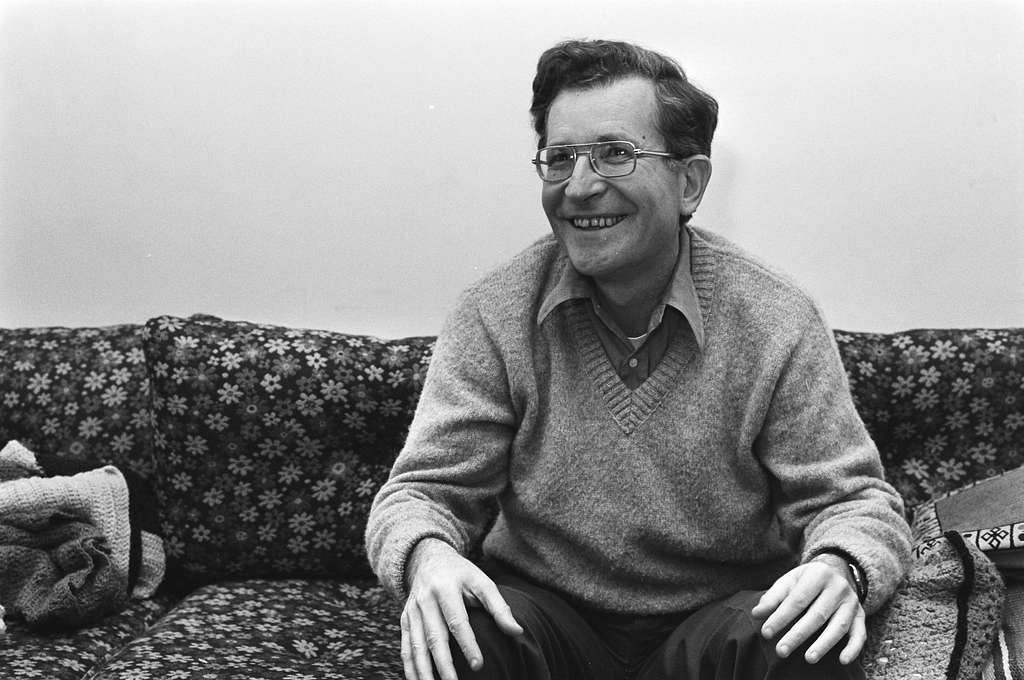
“The United States pioneered the public relations industry. Its commitment was ‘to control the public mind’ as its leaders put it. They learned a lot from the successes of the Creel Commission and the successes in creating the Red Scare and its aftermath. The public relations industry underwent a huge expansion at that time. It succeeded for some time in creating almost total subordination of the public to business rule through the 1920s. This was so extreme that Congressional committees began to investigate it as we moved into the 1930s. That’s where a lot of our information about it comes from.” (Source: Media Control, Page 18)
“The bewildered herd is a problem. We’ve got to prevent their roar and trampling. We’ve got to distract them. They should be watching the Superbowl or sitcoms or violent movies. Every once in a while you call on them to chant meaningless slogans like ‘Support our troops.’ You’ve got to keep them pretty scared, because unless they’re properly scared and frightened of all kinds of devils that are going to destroy them from outside or inside or somewhere, they may start to think, which is very dangerous, because they’re not competent to think. Therefore it’s important to distract them and marginalize them.” (Source: Media Control, Page 23)
“There are growing domestic social and economic problems, nobody in power has any intention of doing anything about them. If you look at the domestic programs of the U.S. administrations of the past 20 years – which includes the Democratic administration – there’s really no serious proposal about what to do about the severe problems of health, education, homelessness, joblessness, crime, soaring criminal populations, jails, deterioration in the inner cities – the whole raft of problems.
In such circumstances you’ve got to divert the bewildered herd, because if they start noticing this they may not like it, since they’re the ones suffering from it.” (Source: Media Control, Page 37)
“The Parade of Enemies
Just having them watch the Superbowl and the sitcoms may not be enough. You have to whip them up into fear of enemies. In the 1930s Hitler whipped them up into fear of the Jews and gypsies. You had to crush them to defend yourselves. Over the last decades, every year or two, some major monster is constructed that we have to defend ourselves against. There used to be one that was always readily available: The Russians.
Then it was international terrorists and narco-traffickers and crazed Arabs and Saddam Hussein, the new Hitler, who was going to conquer the world. They’ve got to keep coming up one after another. You frighten the population, terrorize them.” (Source: Media Control, Page 38)
“It is also necessary to whip up the population in support of foreign adventures. Usually the population is pacifist, just like they were during the First World War. The public sees no reason to get involved in foreign adventures, killing, and torture. So you have to whip them up. And to whip them up you have to frighten them.” (Source: Media Control, Page 26)
“The bewildered herd never gets properly tamed, so this is a constant battle. In the 1930s they arose again and were put down. In the 1960s there was another wave of dissidence. There was a name for that. It was called by the specialized class ‘the crisis of democracy'”.
“Democracy was regarded as entering into a crisis in the 1960s. The crisis was that large segments of the population were becoming organized and active and trying to participate in the political arena. Here we come back to these two conceptions of democracy. By the dictionary definition, that’s an advance in democracy. By the prevailing conception that’s a problem, a crisis that has to be overcome. The population has to be driven back to the apathy, obedience and passivity that is their proper state” (Source: Media Control, Page 28)
“It’s also necessary to completely falsify history. That’s another way to overcome these sickly inhibitions [against war], to make it look as if when we attack and destroy somebody we’re really protecting and defending ourselves against major aggressors and monsters and so on.” (Source: Media Control, Page 31)
“In such circumstances you’ve got to divert the bewildered herd, because if they start noticing this they may not like it, since they’re the ones suffering from it. Just having them watch the Superbowl and the sitcoms may not be enough. You have to whip them up into fear of enemies. In the 1930s Hitler whipped them into fear of the Jews and gypsies. You had to crush them to defend yourselves.” (Source: Media Control, Page 38)
“Every year or two, some major monster is constructed that we have to defend ourselves against. There used to be one that was always readily available: The Russians. You could always defend yourself against the Russians. But they’re losing their attractiveness as an enemy, and it’s getting harder and harder to use that one, so some new ones have to be conjured up.” (Source: Media Control, Page 38)
**********************
Link for downloading Chomsky’s Media Control free of charge: https://library.uniteddiversity.coop/Media_and_Free_Culture/Media_Control-The_Spectacular_Achievements_of_Propaganda-Noam_Chomsky.pdf
All content on this website is copyrighted, and cannot be republished or reproduced without permission.
Share this article!



The truth does not fear investigation.
You can help support Dominion Review!
Dominion Review is entirely funded by readers. I am proud to publish hard-hitting columns and in-depth journalism with no paywall, no government grants, and no deference to political correctness and prevailing orthodoxies. If you appreciate this publication and want to help it grow and provide novel and dissenting perspectives to more Canadians, consider subscribing on Patreon for $5/month.
- Riley Donovan, editor