
A Review
By Alan Danesh
Technopoly
The Surrender of Culture to Technology
By Neil Postman
Vintage Books
A Division of Random House, Inc.
FIRST VINTAGE BOOKS EDITION, APRIL 1993
Copyright © 1992 by Neil Postman
_______________________________________________________________________________________________
“Whether or not it draws on new scientific research, technology is a branch of moral philosophy, not of science.” PAUL GOODMAN, New Reformation

“This book attempts to describe when, how, and why technology became a particularly dangerous enemy. The case has been argued many times before by authors of great learning and conviction—in our own time by Lewis Mumford, Jacques Ellul, Herbert Read, Arnold Gehlen, Ivan Illich, to name a few. The argument was interrupted only briefly by Snow’s irrelevancies and has continued into our own time with a sense of urgency, made even more compelling by America’s spectacular display of technological pre-eminence in the Iraqi war. I do not say here that the war was unjustified or that the technology was misused, only that the American success may serve as a confirmation of the catastrophic idea that in peace as well as war technology will be our savior.” (Source: Technopoly, Introduction, p. xii)
“You will find in Plato’s Phaedrus a story about Thamus, the king of a great city of Upper Egypt.
For people such as ourselves, who are inclined (in Thoreau’s phrase) to be tools of our tools, few legends are more instructive than his. The story, as Socrates tells it to his friend Phaedrus, unfolds in the following way: Thamus once entertained the god Theuth, who was the inventor of many things, including number, calculation, geometry, astronomy, and writing. Theuth exhibited his inventions to King Thamus, claiming that they should be made widely known and available to Egyptians. Socrates continues:
Thamus inquired into the use of each of them, and as Theuth went through them expressed approval or disapproval, according as he judged Theuth’s claims to be well or ill founded. It would take too long to go through all that Thamus is reported to have said for and against each of Theuth’s inventions. But when it came to writing, Theuth declared, ‘Here is an accomplishment, my lord the King, which will improve both the wisdom and the memory of the Egyptians. I have discovered a sure receipt for memory and wisdom.’ To this, Thamus replied, ‘Theuth, my paragon of inventors, the discoverer of an art is not the best judge of the good or harm which will accrue to those who practice it. So it is in this; you, who are the father of writing, have out of fondness for your off-spring attributed to it quite the opposite of its real function. Those who acquire it will cease to exercise their memory and become forgetful; they will rely on writing to bring things to their remembrance by external signs instead of by their own internal resources. What you have discovered is a receipt for recollection, not for memory. And as for wisdom, your pupils will have the reputation for it without the reality: they will receive a quantity of information without proper instruction, and in consequence be thought very knowledgeable when they are for the most part quite ignorant. And because they are filled with the conceit of wisdom instead of real wisdom they will be a burden to society.'” (Source: Ibid. pp. 3-4)
“I begin my book with this legend because in Thamus’ response there are several sound principles from which we may begin to learn how to think with wise circumspection about a technological society. In fact, there is even one error in the judgment of Thamus, from which we may also learn something of importance. The error is not in his claim that writing will damage memory and create false wisdom. It is demonstrable that writing has had such an effect. Thamus’ error is in his believing that writing will be a burden to society and nothing but a burden. For all his wisdom, he fails to imagine what writing’s benefits might be, which, as we know, have been considerable. We may learn from this that it is a mistake to suppose that any technological innovation has a one-sided effect. Every technology is both a burden and a blessing; not either-or, but this-and that.
Nothing could be more obvious, of course, especially to those who have given more than two minutes of thought to the matter. Nonetheless, we are currently surrounded by throngs of zealous Theuths, one-eyed prophets who see only what new technologies can do and are incapable of imagining what they will undo. We might call such people Technophiles. They gaze on technology as a lover does on his beloved, seeing it as without blemish and entertaining no apprehension for the future.
They are therefore dangerous and are to be approached cautiously. On the other hand, some one-eyed prophets, such as I (or so I am accused), are inclined to speak only of burdens (in the manner of Thamus) and are silent about the opportunities that new technologies make possible. The Technophiles must speak for themselves, and do so all over the place. My defense is that a dissenting voice is sometimes needed to moderate the din made by the enthusiastic multitudes. If one is to err, it is better to err on the side of Thamusian skepticism. But it is an error nonetheless. And I might note that, with the exception of his judgment on writing, Thamus does not repeat this error.
You might notice on rereading the legend that he gives arguments for and against each of Theuth’s inventions. For it is inescapable that every culture must negotiate with technology, whether it does so intelligently or not. A bargain is struck in which technology giveth and technology taketh away. The wise know this well, and are rarely impressed by dramatic technological changes, and never overjoyed.” (Source: Ibid. pp. 4-5)
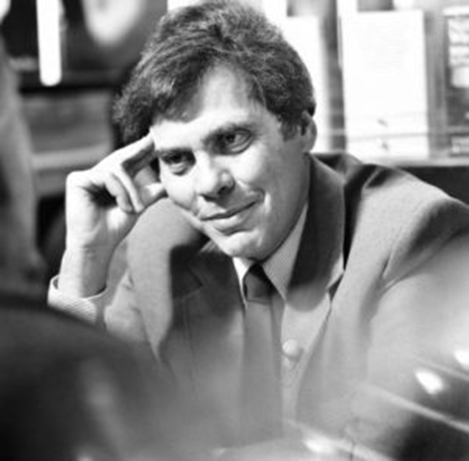
“Harold Innis, the father of modern communication studies, repeatedly spoke of the ‘knowledge monopolies’ created by important technologies. He meant precisely what Thamus had in mind: those who have control over the workings of a particular technology accumulate power and inevitably form a kind of conspiracy against those who have no access to the specialized knowledge made available by the technology. In his book The Bias of Communication, Innis provides many historical examples of how a new technology ‘busted up’ a traditional knowledge monopoly and created a new one presided over by a different group. Another way of saying this is that the benefits and deficits of a new technology are not distributed equally. There are, as it were, winners and losers. It is both puzzling and poignant that on many occasions the losers, out of ignorance, have actually cheered the winners, and some still do.
Let us take as an example the case of television. In the United States, where television has taken hold more deeply than anywhere else, many people find it a blessing, not least those who have achieved high-paying, gratifying careers in television as executives, technicians, newscasters, and entertainers. It should surprise no one that such people, forming as they do a new knowledge monopoly, should cheer themselves and defend and promote television technology. On the other hand and in the long run, television may bring a gradual end to the careers of schoolteachers, since school was an invention of the printing press and must stand or fall on the issue of how much importance the printed word has. For four hundred years, schoolteachers have been part of the knowledge monopoly created by printing, and they are now witnessing the breakup of that monopoly. It appears as if they can do little to prevent that breakup, but surely there is something perverse about schoolteachers’ being enthusiastic about what is happening.
Such enthusiasm always calls to my mind an image of some turn-of-the-century blacksmith who not only sings the praises of the automobile but also believes that his business will be enhanced by it. We know now that his business was not enhanced by it; it was rendered obsolete by it, as perhaps the clearheaded blacksmiths knew. What could they have done?
Weep, if nothing else.
We have a similar situation in the development and spread of computer technology, for here too there are winners and losers. There can be no disputing that the computer has increased the power of large-scale organizations like the armed forces, or airline companies or banks or tax-collecting agencies. And it is equally clear that the computer is now indispensable to high-level researchers in physics and other natural sciences. But to what extent has computer technology been an advantage to the masses of people? To steelworkers, vegetable-store owners, teachers, garage mechanics, musicians, bricklayers, dentists, and most of the rest into whose lives the computer now intrudes?
Their private matters have been made more accessible to powerful institutions. They are more easily tracked and controlled; are subjected to more examinations; are increasingly mystified by the decisions made about them; are often reduced to mere numerical objects. They are inundated by junk mail. They are easy targets for advertising agencies and political organizations. The schools teach their children to operate computerized systems instead of teaching things that are more valuable to children.
In a word, almost nothing that they need happens to the losers. Which is why they are losers.” (Source: Ibid. pp. 9-11)
“….it is not always clear, at least in the early stages of a technology’s intrusion into a culture, who will gain most by it and who will lose most. This is because the changes wrought by technology are subtle if not downright mysterious, one might even say wildly unpredictable.
Among the most unpredictable are those that might be labeled ideological. This is the sort of change Thamus had in mind when he warned that writers will come to rely on external signs instead of their own internal resources, and that they will receive quantities of information without proper instruction. He meant that new technologies change what we mean by ‘knowing’ and ‘truth’; they alter those deeply embedded habits of thought which give to a culture its sense of what the world is like—a sense of what is the natural order of things, of what is reasonable, of what is necessary, of what is inevitable, of what is real.” (Source: Ibid. p.12)
“’The mechanical clock,’ as Lewis Mumford wrote, ‘made possible the idea of regular production, regular working hours and a standardized product.’ In short, without the clock, capitalism would have been quite impossible. The paradox, the surprise, and the wonder are that the clock was invented by men who wanted to devote themselves more rigorously to God; it ended as the technology of greatest use to men who wished to devote themselves to the accumulation of money. In the eternal struggle between God and Mammon, the clock quite unpredictably favored the latter.” (Source: Ibid. p. 15)
“Unforeseen consequences stand in the way of all those who think they see clearly the direction in which a new technology will take us. Not even those who invent a technology can be assumed to be reliable prophets, as Thamus warned.
Gutenberg, for example, was by all accounts a devout Catholic who would have been horrified to hear that accursed heretic Luther describe printing as ‘God’s highest act of grace, whereby the business of the Gospel is driven forward.’ Luther understood, as Gutenberg did not, that the mass-produced book, by placing the Word of God on every kitchen table, makes each Christian his own theologian—one might even say his own priest, or, better, from Luther’s point of view, his own pope. In the struggle between unity and diversity of religious belief, the press favored the latter, and we can assume that this possibility never occurred to Gutenberg.” (Source: Ibid. p. 15)
“We can imagine that Thamus would also have pointed out to Gutenberg, as he did to Theuth, that the new invention would create a vast population of readers who ‘will receive a quantity of information without proper instruction . . . [who will be] filled with the conceit of wisdom instead of real wisdom’; that reading, in other words, will compete with older forms of learning. This is yet another principle of technological change we may infer from the judgment of Thamus: new technologies compete with old ones—for time, for attention, for money, for prestige, but mostly for dominance of their world-view. This competition is implicit once we acknowledge that a medium contains an ideological bias. And it is a fierce competition, as only ideological competitions can be. It is not merely a matter of tool against tool—the alphabet attacking ideographic writing, the printing press attacking the illuminated manuscript, the photograph attacking the art of painting, television attacking the printed word. When media make war against each other, it is a case of world-views in collision.” (Source: Ibid. p. 16)
“New technologies alter the structure of our interests: the things we think about. They alter the character of our symbols: the things we think with. And they alter the nature of community: the arena in which thoughts develop. As Thamus spoke to Innis across the centuries, it is essential that we listen to their conversation, join in it, revitalize it. For something has happened in America that is strange and dangerous, and there is only a dull and even stupid awareness of what it is—in part because it has no name. I call it Technopoly.” (Source: Ibid. p. 20)
“In a technocracy, tools play a central role in the thought-world of the culture. Everything must give way, in some degree, to their development. The social and symbolic worlds become increasingly subject to the requirements of that development. Tools are not integrated into the culture; they attack the culture. They bid to become the culture. As a consequence, tradition, social mores, myth, politics, ritual, and religion have to fight for their lives.
The modern technocracies of the West have their roots in the medieval European world, from which there emerged three great inventions: the mechanical clock, which provided a new conception of time; the printing press with movable type, which attacked the epistemology of the oral tradition; and the telescope, which attacked the fundamental propositions of Judeo-Christian theology.
Each of these was significant in creating a new relationship between tools and culture. But since it is permissible to say that among faith, hope, and charity the last is most important, I shall venture to say that among the clock, the press, and the telescope the last is also the most important. To be more exact (since Copernicus, Tycho Brahe, and to some extent Kepler did their work without benefit of the telescope), somewhat cruder instruments of observation than the telescope allowed men to see, measure, and speculate about the heavens in ways that had not been possible before. But the refinements of the telescope made their knowledge so precise that there followed a collapse, if one may say it this way, of the moral center of gravity in the West. That moral center had allowed people to believe that the earth was the stable center of the universe and therefore that humankind was of special interest to God. After Copernicus, Kepler, and especially Galileo, the Earth became a lonely wanderer in an obscure galaxy in some hidden corner of the universe, and this left the Western world to wonder if God had any interest in us at all.
Although John Milton was only an infant when Galileo’s Messenger from the Stars was printed in 1610, he was able, years later, to describe the psychic desolation of an unfathomable universe that Galileo’s telescopic vision thrust upon an unprepared theology. In Paradise Lost, Milton wrote:
Before [his] eyes in sudden view appear
The secrets of the hoary Deep—a dark
Illimitable ocean, without bound,
Without dimension. . . .” (Source: Ibid. pp. 28-29)
“With the rise of Technopoly, one of those thought-worlds [traditional] disappears. Technopoly eliminates alternatives to itself in precisely the way Aldous Huxley outlined in Brave New World. It does not make them illegal. It does not make them immoral. It does not even make them unpopular. It makes them invisible and therefore irrelevant. And it does so by redefining what we mean by religion, by art, by family, by politics, by history, by truth, by privacy, by intelligence, so that our definitions fit its new requirements.” (Source: Ibid. p. 48)
“As the spectacular triumphs of technology mounted, something else was happening: old sources of belief came under siege. Nietzsche announced that God was dead. Darwin didn’t go as far but did make it clear that, if we were children of God, we had come to be so through a much longer and less dignified route than we had imagined, and that in the process we had picked up some strange and unseemly relatives. Marx argued that history had its own agenda and was taking us where it must, irrespective of our wishes. Freud taught that we had no understanding of our deepest needs and could not trust our traditional ways of reasoning to uncover them. John Watson, the founder of behaviorism, showed that free will was an illusion and that our behavior, in the end, was not unlike that of pigeons. And Einstein and his colleagues told us that there were no absolute means of judging anything in any case, that everything was relative. The thrust of a century of scholarship had the effect of making us lose confidence in our belief systems and therefore in ourselves. Amid the conceptual debris, there remained one sure thing to believe in—technology. Whatever else may be denied or compromised, it is clear that airplanes do fly, antibiotics do cure, radios do speak, and, as we know now, computers do calculate and never make mistakes—only faulty humans do (which is what Frederick Taylor was trying to tell us all along).” (Source: Ibid. pp. 54-55)
“Technopoly is a state of culture. It is also a state of mind. It consists in the deification of technology, which means that the culture seeks its authorization in technology, finds its satisfactions in technology, and takes its orders from technology. This requires the development of a new kind of social order, and of necessity leads to the rapid dissolution of much that is associated with traditional beliefs.
Those who feel most comfortable in Technopoly are those who are convinced that technical progress is humanity’s supreme achievement and the instrument by which our most profound dilemmas may be solved. They also believe that information is an unmixed blessing, which through its continued and uncontrolled production and dissemination offers increased freedom, creativity, and peace of mind. The fact that information does none of these things—but quite the opposite—seems to change few opinions, for such unwavering beliefs are an inevitable product of the structure of Technopoly. In particular, Technopoly flourishes when the defenses against information break down.” (Source: Ibid. p. 71)
“The relationship between information and the mechanisms for its control is fairly simple to describe: Technology increases the available supply of information. As the supply is increased, control mechanisms are strained. Additional control mechanisms are needed to cope with new information. When additional control mechanisms are themselves technical, they in turn further increase the supply of information. When the supply of information is no longer controllable, a general breakdown in psychic tranquillity and social purpose occurs. Without defenses, people have no way of finding meaning in their experiences, lose their capacity to remember, and have difficulty imagining reasonable futures.” (Source: Ibid. p. 72)
“One way of defining Technopoly, then, is to say it is what happens to society when the defenses against information glut have broken down. It is what happens when institutional life becomes inadequate to cope with too much information. It is what happens when a culture, overcome by information generated by technology, tries to employ technology itself as a means of providing clear direction and humane purpose. The effort is mostly doomed to failure. Though it is sometimes possible to use a disease as a cure for itself, this occurs only when we are fully aware of the processes by which disease is normally held in check. My purpose here is to describe the defenses that in principle are available and to suggest how they have become dysfunctional.” (Source: Ibid. p. 72)
“What is clear is that, to date, computer technology has served to strengthen Technopoly’s hold, to make people believe that technological innovation is synonymous with human progress. And it has done so by advancing several interconnected ideas.
It has, as already noted, amplified beyond all reason the metaphor of machines as humans and humans as machines. I do not claim, by the way, that computer technology originated this metaphor. One can detect it in medicine, too: doctors and patients have come to believe that, like a machine, a human being is made up of parts which when defective can be replaced by mechanical parts that function as the original did without impairing or even affecting any other part of the machine. Of course, to some degree that assumption works, but since a human being is in fact not a machine but a biological organism all of whose organs are interrelated and profoundly affected by mental states, the human-as-machine metaphor has serious medical limitations and can have devastating effects.” (Source: Ibid. p. 117)
“Technological immodesty is always an acute danger in Technopoly, which encourages it. Technopoly also encourages insensitivity to what skills may be lost in the acquisition of new ones. It is important to remember what can be done without computers, and it is also important to remind ourselves of what may be lost when we do use them.” (Source: Ibid. p. 120)
“Can a nation preserve its history, originality, and humanity by submitting itself totally to the sovereignty of a technological thought-world?” (Source: Ibid. p. 183)
“Those who resist the American Technopoly are people:
who pay no attention to a poll unless they know what questions were asked, and why;
who refuse to accept efficiency as the pre-eminent goal of human relations;
who have freed themselves from the belief in the magical powers of numbers, do not regard calculation as an adequate substitute for judgment, or precision as a synonym for truth;
who refuse to allow psychology or any ‘social science’ to pre-empt the language and thought of common sense;
who are, at least, suspicious of the idea of progress, and who do not confuse information with understanding;
who do not regard the aged as irrelevant;
who take seriously the meaning of family loyalty and honor, and who, when they ‘reach out and touch someone,’ expect that person to be in the same room;
who take the great narratives of religion seriously and who do not believe that science is the only system of thought capable of producing truth;
who know the difference between the sacred and the profane, and who do not wink at tradition for modernity’s sake;
who admire technological ingenuity but do not think it represents the highest possible form of human achievement.” (Source: Ibid. pp. 183-184)
“A resistance fighter understands that technology must never be accepted as part of the natural order of things, that every technology—from an IQ test to an automobile to a television set to a computer—is a product of a particular economic and political context and carries with it a program, an agenda, and a philosophy that may or may not be life-enhancing and that therefore requires scrutiny, criticism, and control. In short, a technological resistance fighter maintains an epistemological and psychic distance from any technology, so that it always appears somewhat strange, never inevitable, never natural.” (Source: Ibid. pp. 184-185)
“To summarize: I am proposing, as a beginning, a curriculum in which all subjects are presented as a stage in humanity’s historical development; in which the philosophies of science, of history, of language, of technology, and of religion are taught; and in which there is a strong emphasis on classical forms of artistic expression. This is a curriculum that goes ‘back to the basics,’ but not quite in the way the technocrats mean it. And it is most certainly in opposition to the spirit of Technopoly. I have no illusion that such an education program can bring a halt to the thrust of a technological thought-world. But perhaps it will help to begin and sustain a serious conversation that will allow us to distance ourselves from that thought-world, and then criticize and modify it. Which is the hope of my book as well.” (Source: Ibid. 198-199)
_________________________________________________________________________________
Link for downloading a copy of Technopoly for personal reading free of charge: https://archive.org/details/235p-technopoly-neil-postman
All content on this website is copyrighted, and cannot be republished or reproduced without permission.
Share this article!




The truth does not fear investigation.
You can help support Dominion Review!
Dominion Review is entirely funded by readers. I am proud to publish hard-hitting columns and in-depth journalism with no paywall, no government grants, and no deference to political correctness and prevailing orthodoxies. If you appreciate this publication and want to help it grow and provide novel and dissenting perspectives to more Canadians, consider subscribing on Patreon for $5/month.
- Riley Donovan, editor