
Population growth from mass immigration is leading to a corresponding mass densification of many of Canada’s neighbourhoods, as all levels of government scramble to build housing. The YIMBY (“Yes In My Back Yard”) movement – whose adherents effectively function as the shock troops of the development industry – has mobilized immense effort to persuade Canadians that more density in single-family neighbourhoods is harmless, even beneficial.
YIMBYs and developers employ a range of soft-sounding terminology to describe densification, chief among which is “gentle density”, a term which usually refers to the deregulation of zoning to allow for the construction of multiplexes such as duplexes, fourplexes, and sixplexes in single-family neighbourhoods.
My province of British Columbia has gone furthest down the densification road, abolishing single-family zoning in all municipalities with more than 5,000 residents and mandating that local governments allow multiplexes of three to four units on what were previously single-family lots (with up to six units allowed on lots near frequent bus service).
There has recently been an upsurge of alarm on community Facebook pages across the province, as residents of formerly quiet streets get an up close look at how “gentle” the density being pushed by YIMBYs and developers really is. Here are some recent pictures of the multiplexes being built:
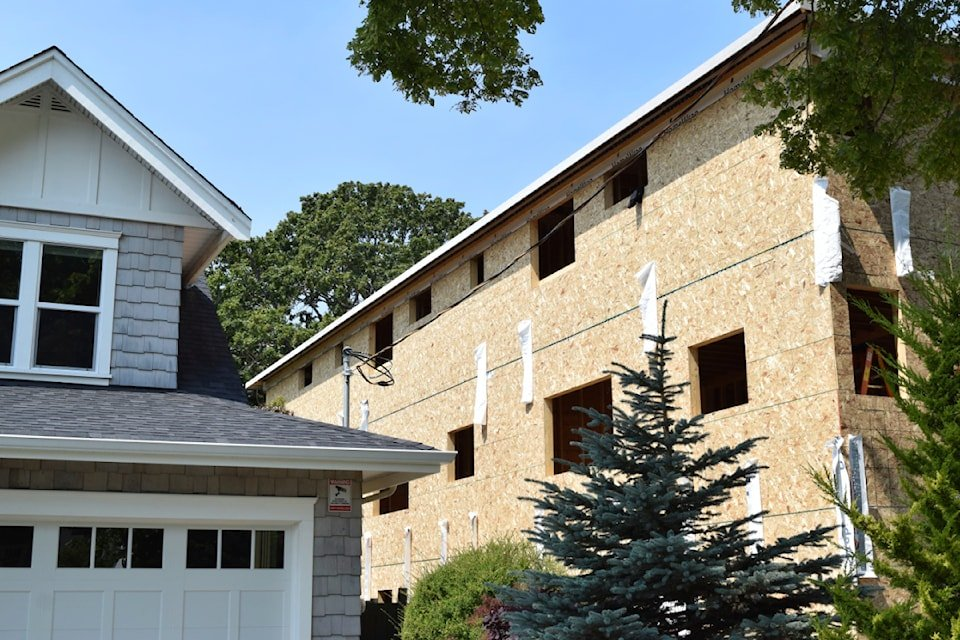
Above is in Oak Bay, Victoria. The height and proximity to the single-family home are quite jarring. (Source).
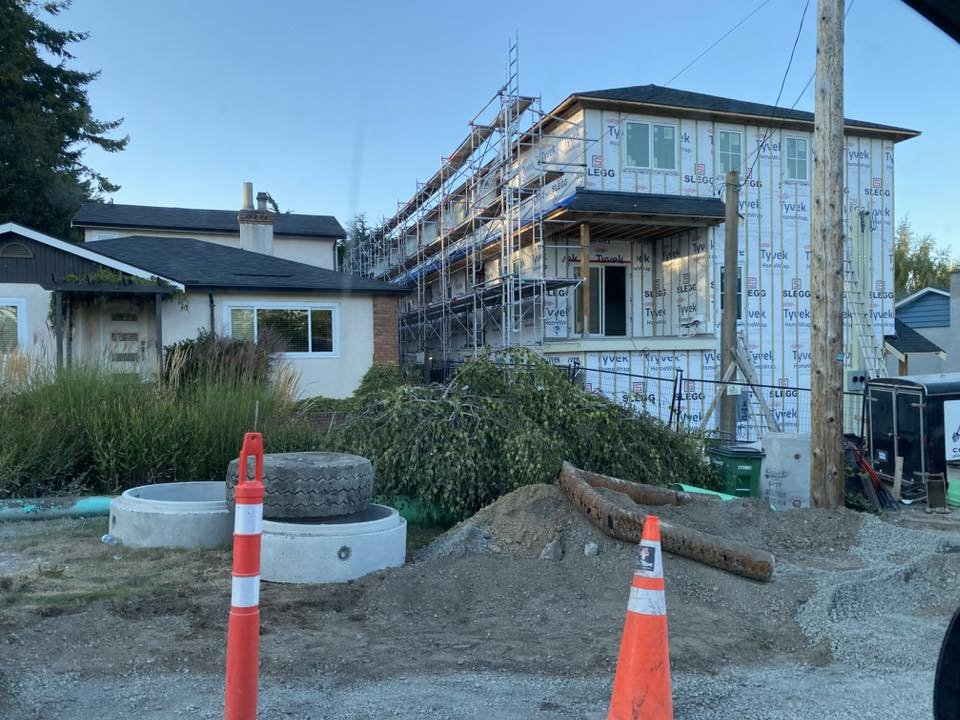
This one is in Saanich, a beautiful semi-rural municipality outside Victoria, with an abundance of old character homes and plenty of farms and green space. To give you a sense of the local character, this is the kind of place where people can still put out a farm stand and know that the odds of it being robbed are very low. You can see from this image how this multiplex has dramatically changed the neighbourhood. In all likelihood, the locals will sell their own land to developers and move to somewhere quieter – if they can afford it.
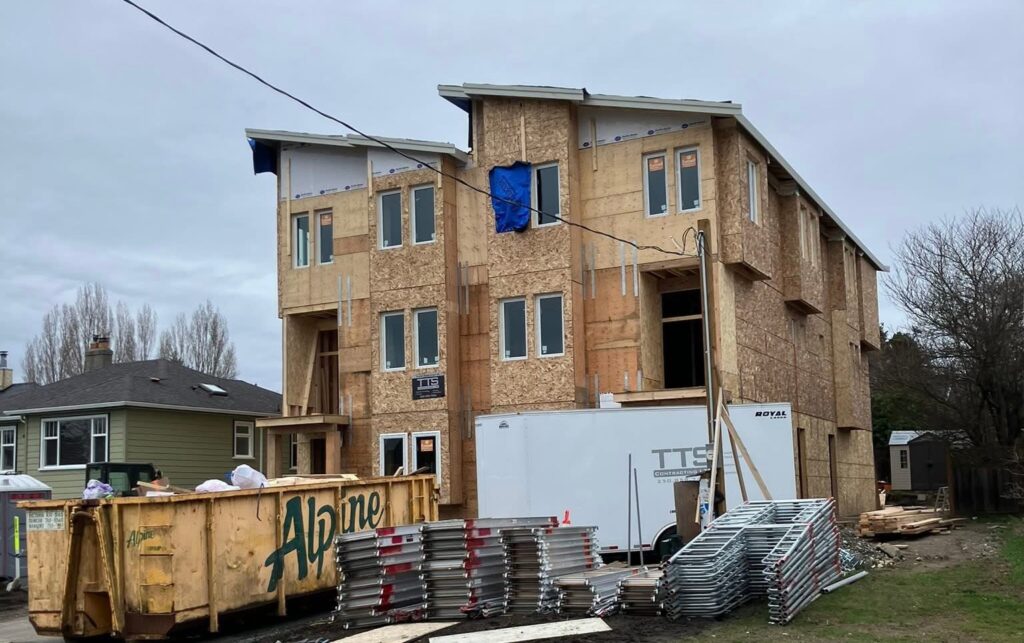
Above is another example from Saanich.

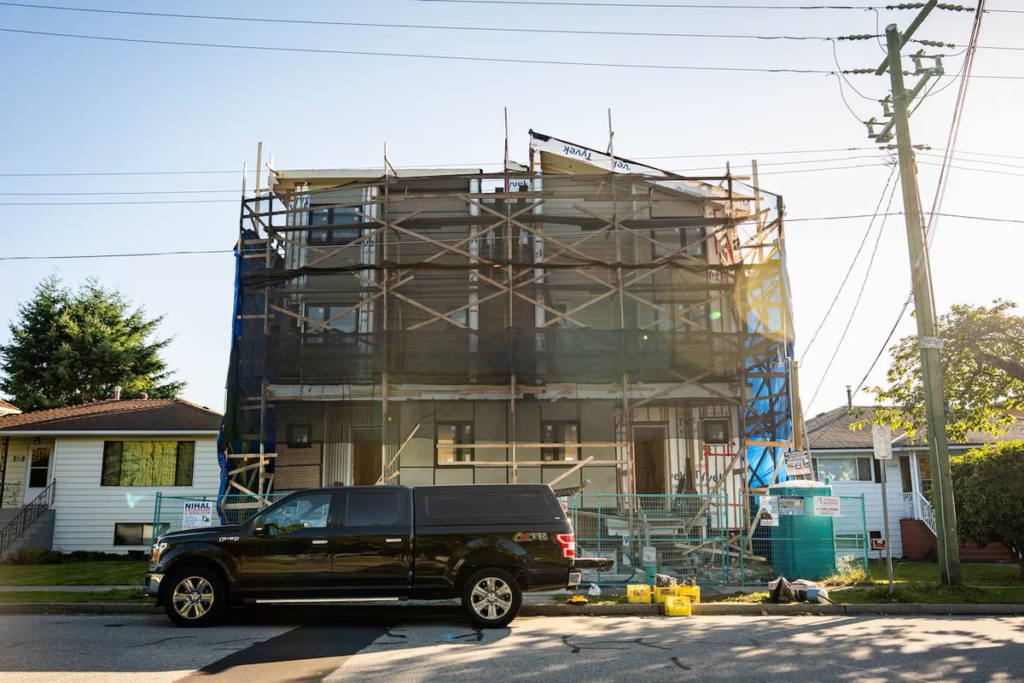
This one is from Burnaby, where towering multiplexes like this provoked such an intense public backlash that their city council was forced to introduce measures to restrict their size.
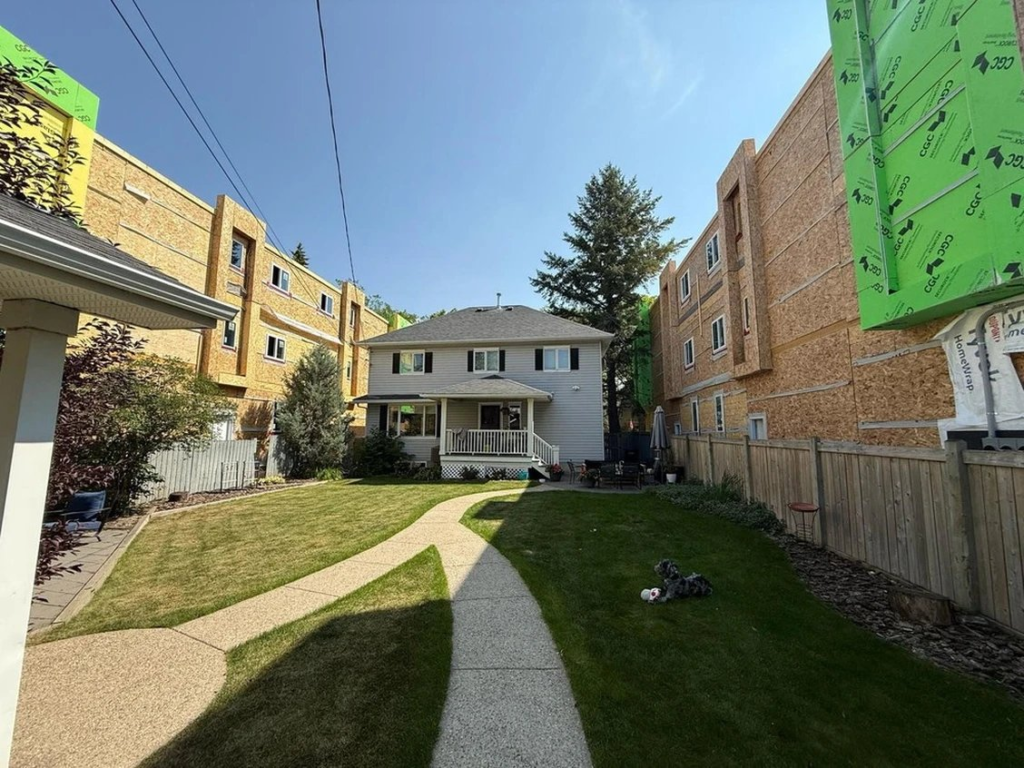
After all those examples from BC, let us finish off with one rather ridiculous instance from Edmonton. I found this in an excellent column for the Edmonton Journal by Lorne Gunter, titled “Edmonton council’s ‘progressive’ infill policy an attack on existing homeowners”. Here was his suggestion for those councillors and developers pushing mass densification:
“Here’s a suggestion for any city councillor who supported the current infill bylaw that permits eight-plexes to be built on any 50-foot lot where once only a single-family house stood: When you have eight-unit apartments or row houses on either side of your own home, come back and we’ll talk.
You should have to live next door to the reality of your policy.
Infill developers should be subject to the same requirement. Let the first two lots onto which they cram some overcrowded monstrosity be the lots on either side of where they live.”
All content on this website is copyrighted, and cannot be republished or reproduced without permission.
Share this article!


Munis can still govern onsite footprint coverage , floorspace totals and heights. They can increase amenity charges. They can consult neighbourhoods abt compromise and common sense. Some like increased tax revenue no matter how it come, others will make it work.
They are still able to govern those details, but if they have other 5,000 residents, then single-family zoning is automatically banned – as are public rezoning hearings for the multi-unit dwellings allowed under the new housing legislation.
Riley, thank you for bringing this topic to the attention of the lucky people reading Dominion Review.
This is bigger than many people realize and will lead to what the density in accommodation leads to -Ghettos.
I live in one of the nicest areas of my city, single family, great neighbours, free little libraries in front of homes, tree lined blvds, well lite ( in fact very much over lit – 51 light poles on my street of .9 kilometre ). A divided four lane road leads into and out of this area next to our giant University. On the other side of that intersecting roadway is another community quite unlike the peaceful clean one mine represents.
It’s become a slurry of messes created when civic officials threw the rule book out on single family dwellings (in our area called R-1 Zoning) allowing the ghettoization of an entire area. It’s all low cost rentals where few if anyone gives a hoot what it looks like, or how they live. Yes, we end up with the ravages of everything stacking people into large faceless dehumanizing buildings brings. Garbage everywhere, filthy cars, trucks, bikes and you name it everywhere. Front yards serve as the dumpster. Railings fall off the fourplex across the street from a middle school. A mess. Most of these slum lord behemoths at 20 years of age need paint and a whole bunch more maintenance they’ve never gotten and will not as long as someone is willing to live in the ghetto someone created for them. History shows us that landlords many who probably don’t live in the community could care less what the rest of us have to look at everyday, or what densification does to kill a town a city a municipality.
I won’t even get into the crime statistics this community bears, or the cost to police it. Disgusting!