Mark Carney is the best Conservative Prime Minister Canada has had since Macdonald, and I do not mean that as a compliment.
Of course, the Conservative PMs we have had are not a great lot in my view, particularly Diefenbaker, Mulroney, and Harper. Carney governs more like Harper or Mulroney than anyone, because he is a neoliberal.
Mark Carney came to power promising “elbows up”, but for 18 months we had noting but caving in or retreats in the face of the US, although Canada was the only country beside China to levy counter-tariffs. Carney walked away from negotiations when Trump’s crew made outrageous last-minute demands and over-played their hand, but even without those US demands the deal would likely not have gone down well with Canadians.
Mark Carney’s reign has been very neoliberal. The current name for this is “abundance liberalism”, a fad that includes deregulation, including gutting environmental protections and public consultation – supposedly in order to get rid of red tape or barriers to getting things done quickly.
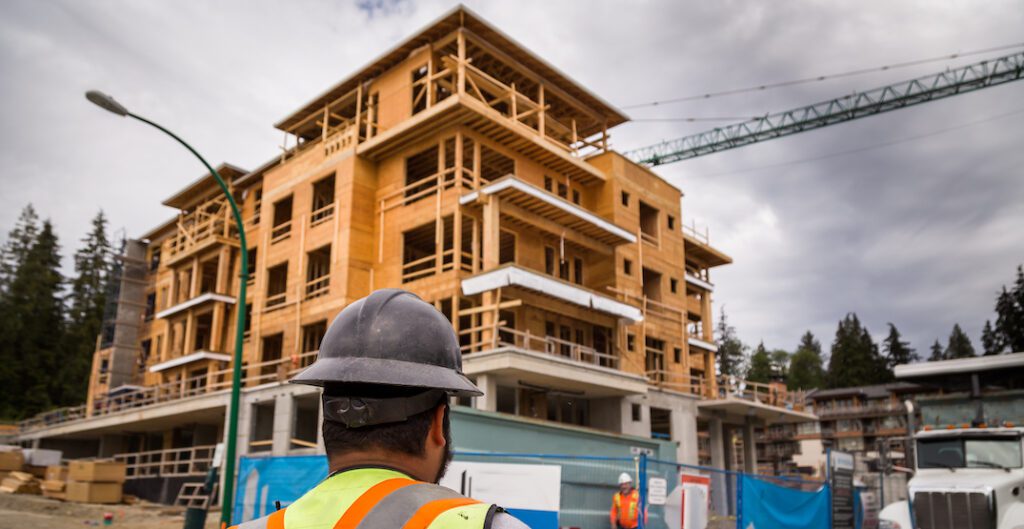
The Carney government is seeking to pass Bill C-39, the Building Canada Strong Act, which among other things will mandate that federal reviews and decisions are completed within one year. I am not going to defend red tape, and streamlining approval processes is not in itself bad, but this seems like the pendulum swinging back to the 1950s when governments could ram through megaprojects. We risk forgetting the lessons we learned that led to safeguards and greater scrutiny for projects.
Carney didn’t campaign in the 2025 election on the policies he is now implementing, and he is making top-down decisions on the fly with little or no discussion with Canadians or debate in Parliament.

Mark Carney seems keen on selling off Canada off bit by bit to foreign investors, privatizing infrastructure, deregulation, reducing environmental protections or rules, and more military spending. These are Ronald Reagan or Brian Mulroney policies.
Carney made the commitment to spend 5% of GDP on defence with no warning or public input. This pledge was made purely to appease Donald Trump and most NATO members agreed to do the same, except for Spain, which said “no”. But while Canada is in NATO, we are not a front-line nation, like Finland or Poland, at risk of invasion. Canada is not even in Europe, and we are not even dependent on Europe or the UK. Russia is unlikely to attack us even if we were not in NATO or NORAD.
Granted, the 5% defence spending commitment is really 3.5% on the military and another 1.5% that can be put towards defence related infrastructure, broadly defined, but for decades, Canadians were quite content spending under 2% – even during the Cold War. Russia is not the USSR and can barely holds it own against Ukraine. Both Russia and China are primarily military threats to their regions, and a regional war is unlikely to include the Western Hemisphere, where we live.
The Prime Minister just announced he will privatize operations for four major airports with 35 to 50 year concessions without selling the underlying land. This sounds a lot like the 99-year lease of Highway 407 done under Ontario Premier Mike Harris. PM Brian Mulroney privatized Air Canada, CN, Petro-Canada, and other Crown corporations or assets. Other than CD Howe selling off assets at the end of the Second World War, this has never been a Liberal approach, though Chretien did finish what Mulroney started.
Carney has indicated a willingness to have government involved more directly in the economy, including on housing, with things like Build Canada Homes and the Canada Strong Fund but his actions lately seem to be going in the opposite direction.
Mulroney reversed the economic nationalism of the Pierre Trudeau years. Mulroney shut down the Foreign Investment Review Agency (FIRA), while Carney also seems to have no qualms about foreign ownership in the Canadian economy. Mulroney pandered to the provinces with the Meech Lake Accord, while Carney also seems to try to appease premiers rather than fight.
To reduce dependence on the US market, Carney’s main policy thrust has been to sign many free trade deals with smaller countries, even though these deals have done little in the past to diversify trade, instead mainly taking power away from government and giving more rights to investors. Carney has also reversed the environmental policies of Justin Trudeau in the name of approving projects faster.
Mark Carney is a former central banker and at heart is an economist, who worked on Wall Street for over a decade. Anglo-American economics is essentially in favour of free markets and private enterprise. It seems like you can take Mark Carney out of Goldman Sachs, but in the end, you can’t take Goldman Sachs out of Mark Carney. His worldview is still that of an investment banker.
All content on this website is copyrighted, and cannot be republished or reproduced without permission.
Share this article!


The truth does not fear investigation.
You can help support Dominion Review!
Dominion Review is entirely funded by readers. I am proud to publish hard-hitting columns and in-depth journalism with no paywall, no government grants, and no deference to political correctness and prevailing orthodoxies. If you appreciate this publication and want to help it grow and provide novel and dissenting perspectives to more Canadians, consider subscribing on Patreon for $5/month.
- Riley Donovan, editor