
The Trans-Pacific Partnership (TPP), in its slightly revised version, CPTPP, is referred to by the official circles as a trade agreement; this is a deception intended to hide from the public the fact that this multilateral agreement is almost entirely for the expansion and protection of investor rights of transnational corporations. It creates a global corporate empire – a “corporate world government” – unchecked by and unaccountable to citizens of the signatory governments.
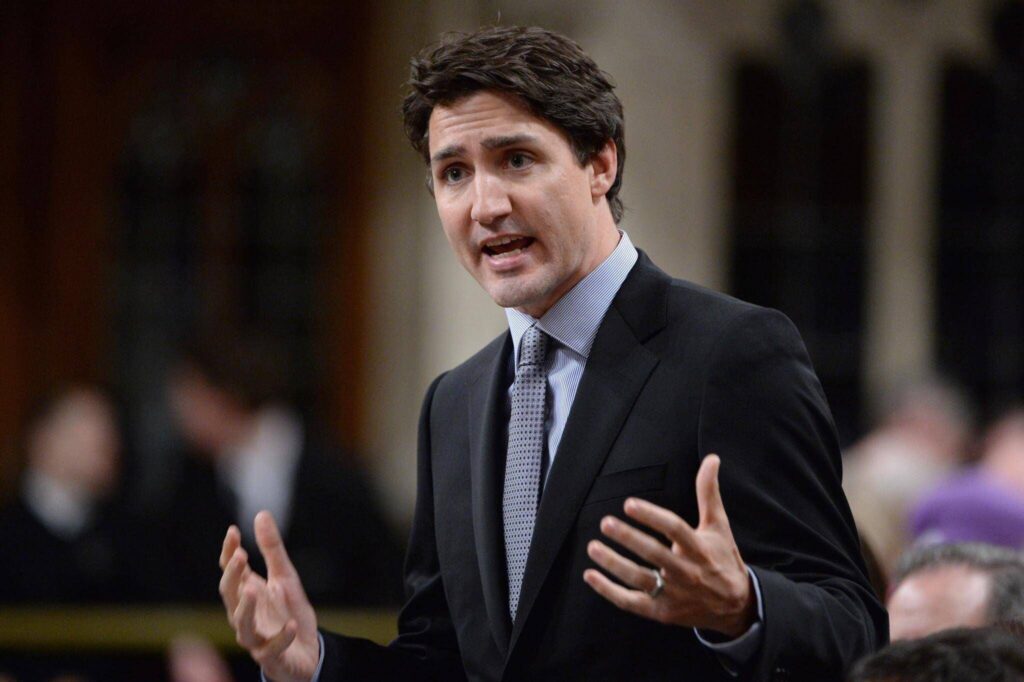
Canada officially ratified the successor to the TPP, known as the Comprehensive and Progressive Agreement for Trans-Pacific Partnership (CPTPP) via Bill C-79 in 2018 during the reign of Justin Trudeau.
“On January 23, 2017, President Donald Trump withdrew the United States from the original Trans-Pacific Partnership (TPP), arguing the deal was unfair, would harm American manufacturing, and destroy jobs. Viewing it as a “potential disaster,” he prioritized bilateral negotiations over multilateral deals to protect U.S. worker wages.” (Source: BBC)
The CPTPP is not significantly different from the original TPP; it merely reduces further some of the tariff barriers. Nearly all provisions of the original TPP are incorporated into the text of the CPTPP.
The TPP “is designed to carry forward the neoliberal project to maximize profit and domination, and to set the working people in the world in competition with one another so as to lower wages to increase insecurity.
These are extreme, highly protectionist measures designed to undermine freedom of trade. In fact, much of what’s leaked about the TPP indicates that it’s not about trade at all, it’s about investor rights.” (Source: Noam Chomsky)
By treating knowledge as private corporate property, The TPP prevents innovation, scientific research, and technological development of the economically weaker members of the treaty, and in about 25 years would reduce them to the level of the Third World colonies of the dominant partners in the treaty.
Similar to the Canada-U.S-Mexico “Free Trade” Agreement, the CPTPP treaty elevates foreign corporations to the level of sovereign governments, and enables these corporations to sue governments for the loss of expected future profits over enacting legislation for the protection of their citizens.
A glaring example of this happened with the NDP government of Bob Rae in Ontario in 1990. The Ontario government was planning to establish public auto insurance similar to British Columbia’s ICBC. But it was warned that the private American-owned auto insurance companies operating in Ontario could sue the government for hundreds of million dollars under the provisions of the Free Trade Agreement with the U.S. for the loss of expected future profits. The plan for the public auto insurance had to be abandoned in 1991.
When Dave Barrett established the ICBC in 1972, there was no Free Trade Agreement with the U.S. in existence that would require full compensation for private American auto insurance companies operating in Canada for the loss of expected future profits into the infinite future. But in Bob Rae’s time, there was already the Free Trade Agreement in place, and American auto insurance companies could sue the government for loss of anticipated future profits.
The CPTPP signatory parties will be faced with the loss of national sovereignty whereby supreme authority would be transferred to the so-called Investor State Dispute Settlement Tribunals (ISDS) stacked by corporate lawyers who would act as judges, forcing the signatory nations to pay massive cash compensation payments to foreign corporations from the national treasury.

Indeed foreign corporations alone are granted this privilege, which will not be available to domestic corporations.
No support or subsidies could be provided to Canadian corporations to assist them to compete effectively vis-à-vis giant transnational corporations, unless the same subsidies are also provided to foreign corporations operating in Canada.
Even enactment of legislation and policies equally applicable to both Canadian and foreign corporations would allow foreign corporations to sue Canadian government for cash compensation.
Canadian courts, and even the Supreme Court and the Parliament would be by-passed and made irrelevant in all matters dealing with foreign corporate claims for compensation related to public-interest legislation and policies enacted by the government of Canada.
“Article 9.4: National Treatment
- Each Party shall accord to investors of another Party treatment no less favourable than that it accords, in like circumstances, to its own investors with respect to the establishment, acquisition, expansion, management, conduct, operation, and sale or other disposition of investments in its territory.
- Each Party shall accord to covered investments treatment no less favourable than that it accords, in like circumstances, to investments in its territory of its own investors with respect to the establishment, acquisition, expansion, management, conduct, operation, and sale or other disposition of investments.
- For greater certainty, the treatment to be accorded by a Party under paragraphs 1 and 2 means, with respect to a regional level of government, treatment no less favourable than the most favourable treatment accorded, in like circumstances, by that regional level of government to investors, and to investments of investors, of the Party of which it forms a part.” (Source: Text of the CPTPP)
Under the Treaty, Canada will abdicate the power to regulate the flow of “business” visitors to Canada, as specified in section A of the Treaty inserted below. We can assume from the text of the Treaty inserted below that “business” visitors could include large number of workers imported into Canada for installation, maintenance or repair of the facilities of the other Party.
“A. Business Visitors
- Canada extends its commitments for “after-sales or after-lease service” to business persons of another Party, if that Party has made a commitment in its Schedule for after-sales and after-lease related activities (e.g. installation, maintenance or repair) without reserving the right to impose or maintain an economic needs test or numerical restriction for those activities.
- Canada extends all other commitments under this category to business persons of another Party, if that Party has made a commitment in its Schedule without reserving the right to impose or maintain an economic needs test or numerical restriction for any of the following headings: – Business Visitors – Short Term Business Visitors – Service Sales Persons
- Canada shall grant temporary entry to Business Visitors, without requiring that person to obtain a work permit or an equivalent requirement prior to entry as a condition for temporary entry.
- Canada will not impose or maintain any numerical restriction relating to temporary entry of Business Visitors.” (Source: Text of the CPTPP)
The signatory governments would be required to make best efforts to process applications for marketing approval of pharmaceuticals and other products in an efficient and timely manner, with a view to avoiding unreasonable or unnecessary delays, thus endangering public health of their citizens. (Source: Article 18.46 of the CPTPP)
No signatory government could require health warnings on cigarette packaging or the labeling of GMO foods without the risk of being sued for hundreds of millions of dollars – for the loss of expected future corporate profits.
No signatory government could require the foreign corporations to live up to the standards of corporate social responsibility for the protection of the environment or public health. It can only “encourage enterprises operating within its territory or jurisdiction, to adopt voluntarily, into their policies and practices, principles of corporate social responsibility that are related to the environment…” (Source: Article 20.10 of the CPTPP)
The language of the TPP on environmental, health and other regulatory provisions is fraudulent and self-cancelling as it states that signatory governments may enact public interest legislation and policies so long as the legislation and policies do not conflict with the sweeping rights given by the TPP to foreign investors.
All content on this website is copyrighted, and cannot be republished or reproduced without permission.
Share this article!



The truth does not fear investigation.
You can help support Dominion Review!
Dominion Review is entirely funded by readers. I am proud to publish hard-hitting columns and in-depth journalism with no paywall, no government grants, and no deference to political correctness and prevailing orthodoxies. If you appreciate this publication and want to help it grow and provide novel and dissenting perspectives to more Canadians, consider subscribing on Patreon for $5/month.
- Riley Donovan, editor