The earliest manifestation of Canadian nationalism began just before the First World War. The person leading the movement was Henri Bourassa who was considered the ideological father of French-Canadian nationalism. However he established the Canadian Nationalist League in 1903 with the aim of instilling pan-Canadian nationalist spirit among the French-Canadian population.
Shortly before the start of the Great War, “efforts were made at succeeding Imperial conferences to induce the Dominions to obligate themselves for Imperial wars without a voice in deciding what, where, and when those wars should be fought. Under pressure from Britain Canada abdicated all the true functions of a nation at war — asking no questions, asserting no claim to belligerent identity, conducting herself like an ancient vassal — a mere puppet among the nations, accepting, apparently with grateful servility, the promise of being “consulted” about her own destiny, and never dreaming of herself being represented at the table on which her fate may be written.” (Source: Canadian Nationalism and the War)
Bourassa believed that the future for Canada ought to be independence or Imperial partnership. He stood for independence and, short of it, for Imperial partnership.
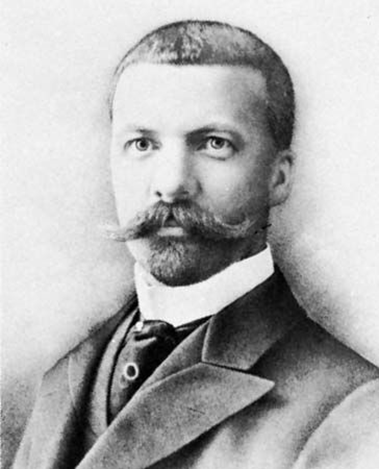
He opposed Canada joining the Great War on Britain’s behalf and leaving Canadian forces under British command.
In an interview given during the War he stated “suppose the returning Canadian army should, in the main, feel that its position in Flanders, at the absolute disposal of commanders who proved their inability to appreciate the dominant factors of trench warfare until after 10,000 [Canadian] lives had been needlessly sacrificed, was not worthy of their country, and that in any future wars the complete, final responsibility for Canadian lives must remain in Canadian hands.” (Ibid)
Bourassa asserted that when the choice is put up to Canada, he would be for Canadian independence, and he would fight for it. But he would accept Imperial partnership, if that was the decision of the people of Canada, for it is very much to be preferred to the colonial status Canada had at the time. He believed that the experiment of a common fund for Imperial defence was well worth trying, because at least it offered the chance of a dazzling success.
“After Henri Bourassa, Canadian nationalism fractured into two distinct paths: a pan-Canadian autonomy from Britain and an intensifying, inward-looking Quebec nationalism. Bourassa’s bicultural federalist vision was succeeded by the separatist-leaning nationalist ideology of intellectuals like Lionel Groulx, shifting focus from navigating within Canada to creating a separate francophone state.
Bourassa’s dream of a bilingual, unified Canada was replaced by a more fragmented landscape, with Quebec nationalism increasingly defining itself in opposition to federalism.” (Source: The Canadian Encyclopedia)
Bourassa strongly opposed the draft during the conscription crisis of 1944.
Around 1970, Canadian nationalism was fuelled by anxieties over American economic and cultural dominance, resulting in a surge of books focusing on economic independence and cultural survival. Key publications included George Grant’s Lament for a Nation (1965), Kari Levitt’s Silent Surrender (1970), and Margaret Atwood’s literary/cultural book Survival (1972).

“First published in 1970, Silent Surrender: The Multinational Corporation in Canada helped educate a generation of students about Canadian political economy. Kari Levitt details the historical background of foreign investments in Canada, their acceleration since World War II, and the nature of intrusions by multinational corporations into a sovereign state.
Silent Surrender was prophetic in predicting that the ultimate consequence of relinquishing control of the Canadian economy to United States business interests would be political disintegration through the balkanization of the country and its eventual piecemeal absorption into the American imperial system.” (Source: publisher’s review)
Canadian nationalism became an important issue during the 1988 federal election that focused on the proposed Canada-United States Free Trade Agreement which Canadian nationalists opposed on the basis that it would lead to the inevitable domination of Canada by the United States.
Indeed the name “Free Trade” has been a deception. In reality it has meant free investment and take-over of vital Canadian economic assets, unhindered by any concerns for Canada’s national independence.
Canadian nationalism has been in decline, even non-existent, since the signing of the “Free Trade” Agreement. However, we are currently witnessing some indication of its revival following the repeated threats of becoming the 51st State.
All content on this website is copyrighted, and cannot be republished or reproduced without permission.
Share this article!




The truth does not fear investigation.
You can help support Dominion Review!
Dominion Review is entirely funded by readers. I am proud to publish hard-hitting columns and in-depth journalism with no paywall, no government grants, and no deference to political correctness and prevailing orthodoxies. If you appreciate this publication and want to help it grow and provide novel and dissenting perspectives to more Canadians, consider subscribing on Patreon for $5/month.
- Riley Donovan, editor